
Football is selling itself short
The game’s clubs, brands and platforms are sat on enormous cultural riches. So why does it all feel so interchangeable?
“Don’t look at the world with your hands in your pockets,” Mark Twain famously said. “To write about it, you have to reach out and touch it.”
It is easy today to conceive of the game of football as a world unto itself, a supermassive cultural phenomenon, with its own gravitational forces and life-giving nutrients. The orbit of that world is undeniably larger and more expressive than ever before.
And yet in spite of its dominance and outsized impact on our lives, we’ve reverted to experiencing it from afar—passively, in ways that feel less connected and less purposeful. We’ve put our hands back in our pockets.
This is a recognisable paradox of modern life that goes beyond football: we know so much, but feel so little. We’ve never had this many ways to tell the story of the game, nor this many stories to tell. But while the volume has gone up, the proximity between the subject matter and the people it is supposed to represent has grown wider and wider with it.
“The medium is the message metaphor”
In 1964, media theorist Marshall McLuhan posed that the manner in which we send and receive information has a far greater impact on society than the content of the message itself. Nearly 20 years later, Neil Postman’s Amusing Ourselves to Death went one step further and argued that not only does it shape society, but it becomes a metaphor for it. In other words, the medium doesn’t just present the content—our very understanding and comprehension of the content is shaped and framed by the way it’s delivered.
In the digital world, platform walls and algorithms dictate how we share information and tell stories. But rather than viewing social media platforms as distribution channels and useful tools, we’ve allowed ourselves to live and create within their confines. Frequency is now more important than impact and engagement has replaced relevance as an indicator of success.
You can excuse people generally for giving into the technological impulses that have altered the way we consume contemporary media—it’s how they’ve been designed, after all. But there are no excuses for clubs and brands working in football that squander opportunities to tell meaningful stories by doing so strictly within the algorithmically defined contours of two or three social media platforms.
Templates are killing us
This is the creative trap; working within these boundaries frames the entire football worldview. The room for experimentation, fresh formats and original experiences is stifled, while the incessant need for content compounds the issue.
This is where creative direction, storytelling, formatting and audience building becomes templated. How many copy-and-paste kit launches have we seen in the past few years? Clubs that previously didn’t bother are now going to the effort of fully integrated campaigns for kit launches—which is a good and necessary commercial development—but often they’re borrowing from a model that worked three years ago, or they’re mistaking aesthetics for narrative, or worse, launching something completely detached from their own identity, because they think their target market (their fans!) won’t notice or care.
Clubs don’t need to reinvent the wheel, or break the bank. The wastage in football is huge, and the proliferation of endless kit launches, as Athens Kallithea explained in the year they chose to forgo releasing new kits, has created a ‘desperate drive to capitalise’, which has created an environment that is ‘increasingly detached from what really represents the culture.’
But football clubs and the brands they work with have something most companies spend years consulting on, moulding, reinventing and designing: an identity. Only a football club could draw an enduring narrative from a dialect, or a street name, or a specific shade of green.
Why football is selling itself short
This game is made up of an infinitely growing web of connections between centuries-old institutions, made up of complex and multi-faceted people, each with their own romantic or ugly or painful reason for showing up, each with a unique attachment to a certain community in a certain place.
You can’t distill that sort of nuance into something immediately understandable or engaging. When the algorithm becomes a de facto creative director, you prioritise quick wins over building sustainable, personal connections with your audience, whether that’s a reader, a fan or a consumer.

Football is therefore selling itself short—literally. Across clubs, brands, platforms and organisations, the preference for short-term dopamine hits and templated campaigns over considered, narrative-based storytelling is a betrayal of two of the game’s most treasured and enduring assets: the fans, and the culture.
Over time, fans recognise the pattern. They become disillusioned and apathetic. They’ll stomach bad results, often for years on end. But the minute you commodify, repackage, water down and resell their loyalty and cultural attachment back to them, you’ve lost them. The game is in great danger of repeating this trick on a massive scale.
It’s not just clubs and brands
Sadly, our coverage of the game has fallen into the same trap. Publishing frequency has replaced all editorial purpose; chasing engagement, optimising formats and the endless recycling of press releases without interrogation of the underlying motivation or creative approach or message.
Whatever you thought of Florence Pernet’s TV-photography during the World Cup, one thing was clear: almost none of the coverage ever stopped to explore why it provoked such polarising opinions. They couldn’t see beyond the aesthetics. A viral trend followed, and three weeks later, it had been forgotten.
Worse still, we’ve started to present football culture as a homogenous entity. Social media is a labyrinth of endlessly copied-and-pasted, identical formats.
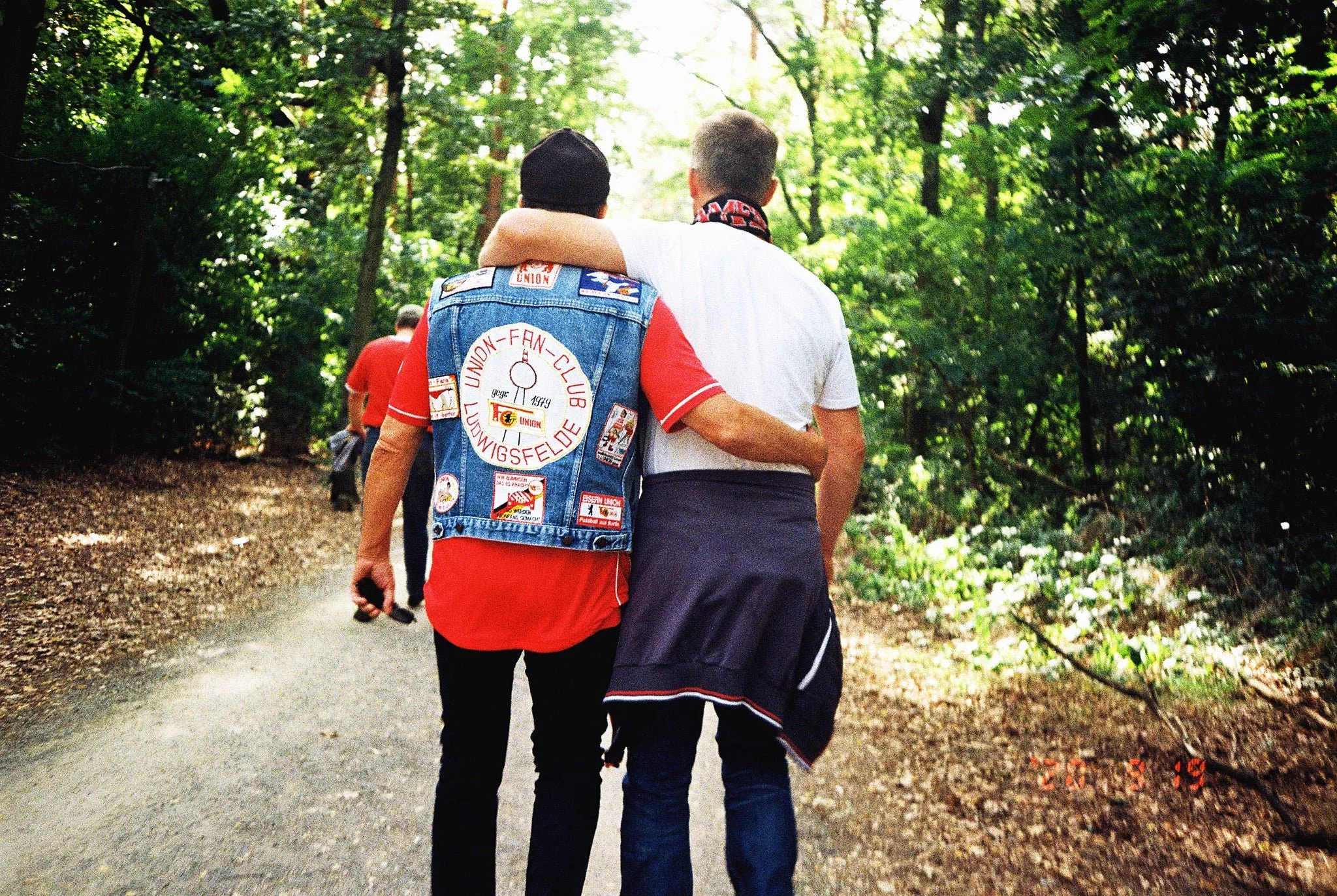
Indistinguishable photographic carousels with a bit of overlapping copy and some vague lines about how [insert club] has a ‘unique identity’ (without any editorial intent to explore what makes it or its people unique) to farm engagement for engagement’s sake, is not being a good custodian of the game’s culture. It treats audiences like children. It’s junk food.
We can break free
Fortunately, just as we began to realise in the late 1990s that junk food was slowly killing us, I think we’re coming to a similar realisation today. People don’t want junk food. They want to feel a connection to something: for it to leave an impact on them. Half of young people in the UK would have preferred to have grown up without the internet. The sale of physical books and vinyl records are trending upwards thanks to this same generation. While these facts might not be an outright rejection of digital culture, it is a recognition of its limits—of what it isn’t giving us. In that sense, the tide is turning.
And here’s where I see a hopeful opportunity for the game. We have the potential to give people new excuses to connect, to be educated, to be blown away by something they’d never considered before. Football’s cultural cache won’t ever stop expanding, and there will never be a shortage of talented people doing amazing things to inspire and celebrate every corner of it.
We can rewrite the rules of the game by slowing down, getting closer to our subjects, and trusting our audiences. Perhaps all we have to do is take our hands out of our pockets, reach out, and touch it again.