
TCD meets filmmaker Alec Cutter: Inside Várzea, the soul of Brazilian grassroots football
When Cafu climbed up onto the podium and lifted the World Cup trophy above his head on that humid Yokohama night in 2002, his own legacy now irrefutable, he chose to dedicate the moment to his roots. In black marker pen, scribbled across that iconic yellow jersey with green trim, it read: ‘100% Jardim Irene.’
In turn, Cafu made sure that Brazil’s record-breaking fifth World Cup triumph would forever belong, in a sense, to that Eastern neighbourhood of São Paulo. In a much broader sense, it also belongs to those neighbourhoods all over Brazil’s metropolises and countrysides.
He didn’t know it yet, but watching some 5,000 miles away on the West Coast of the United States, a young Alec Cutter would later come to explain exactly why a World Cup could be born out of a place like Jardim Irene.
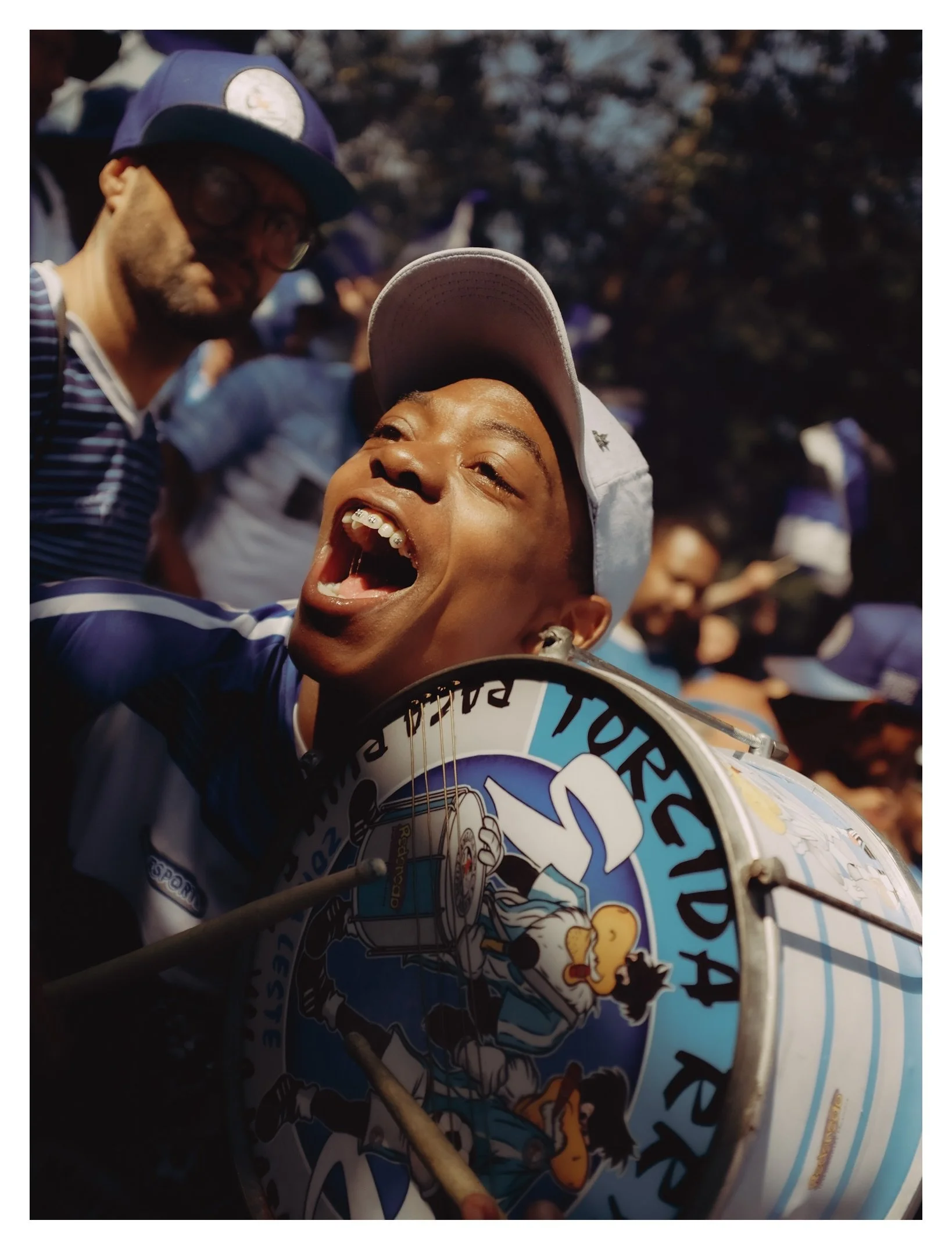
‘I vividly remember ‘98 and ‘02; they were my formative World Cup experiences. Growing up in Seattle, the only football on television was the World Cup.’
Image left: Cássio Andreasi
After visiting regularly as a kid through family friends, Alec, now an established filmmaker, director and producer, is an adoptive Carioca of 12 years. ‘I’ve always had a strong connection to Brazilian football,’ he says.
‘It was all a labour of love’ is how he describes The Root of the Game, the three-part series on the wild world of Brazilian grassroots football, which released on Netflix just last week. Alec is the show’s creator and director.
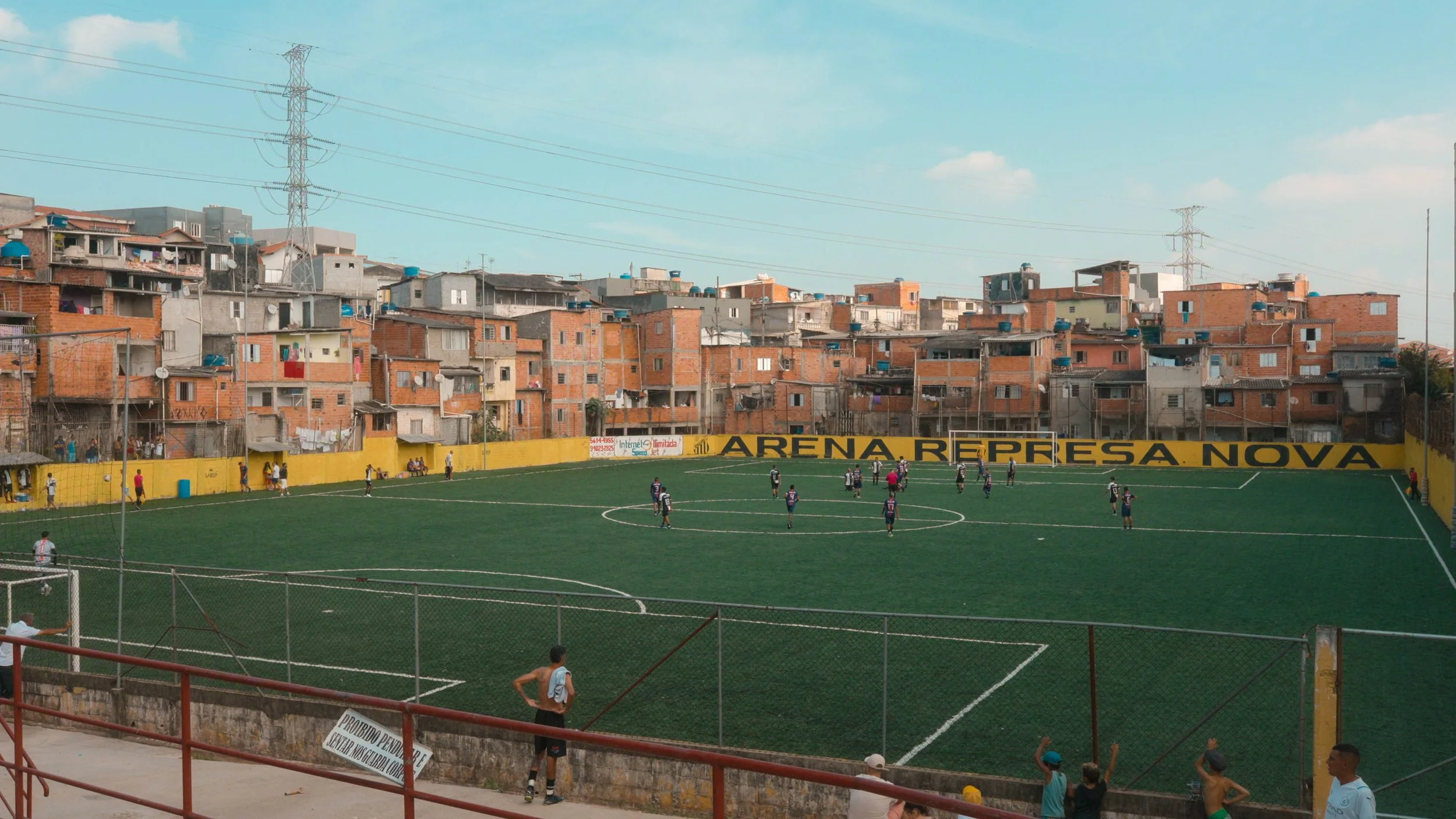
At the heart of the documentary series is the untold phenomenon of Várzea, a broad term that encompasses organised amateur and semi-professional football across Brazil. The Root of the Game zeroes in on the Super Copa Pioneer, the most prestigious Várzea tournament in the country, set among the sprawling suburbs of São Paulo. The series takes us deep inside the chaos; pulsating 11-a-side games played inside claustrophobic cages at the heart of labrinyth-like neighbourhoods across the city. Each team represents a barrio, each barrio, an idea.
‘About 90% of Brazil’s national team players started out in Várzea football,’ explains Cafu at the outset of the first episode. Only when the series unravels the stories behind each team do you get a true sense of how deeply embedded the teams are within their communities.

100% Jardim Irene. Cafu makes an appearance in The Root of the Game.
One path, for example, follows the aspirational journey of Sujão, a highly rated attacker from MEC in Cidade Tiradentes. Another follows ADC Milianos, from Jardim Rosana, who formed in the 1990s by combining two of the neighbourhood’s most prominent forms of cultural entertainment: football and hip-hop.
The series continues to pull at these threads, exploring the distinct identities, star players and foundational stories of each team vying for Super Copa Pioneer glory.
The Root of the Game also presents, in uncompromising ways, the real consequences that can accompany a life of Várzea in the favelas.
‘It [Várzea] literally translates to ‘the river bed’, the flat, dried up areas beside floodplains,’ Alec explains. ‘When football arrived in Brazil, it was a sport for the rich, played in country clubs, and people from these communities—especially black players—couldn’t enter to play. It was the sport of the elite.’
‘The only place that was constantly flat land, that these poorer communities could play in, was in the river beds… the Várzea. That’s where people on the periphery of the city started to play the game.’
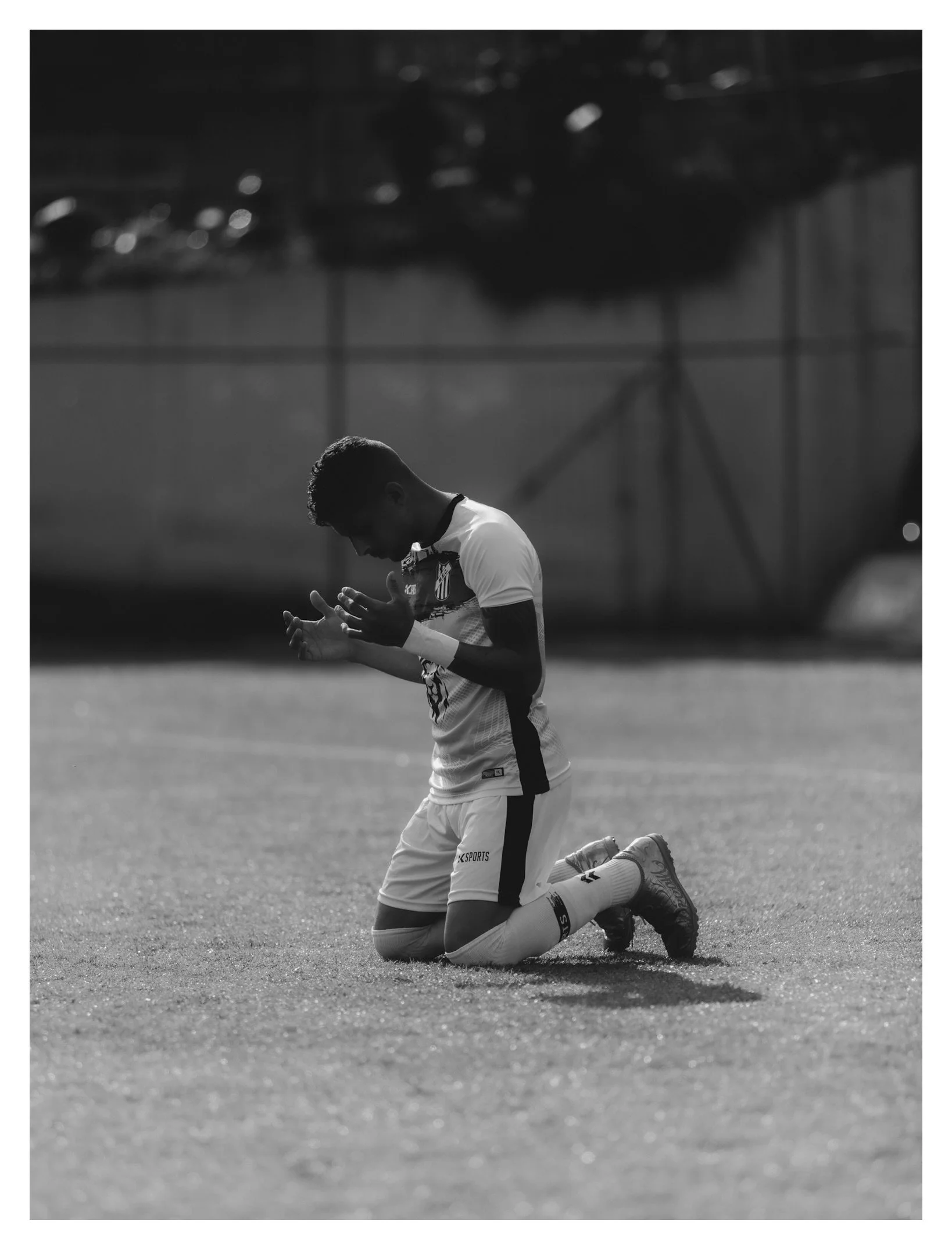
There is an ever-present tension inherent within the games and its culture. The etymology of Várzea reflects its modern incarnation: football played on the very edge—of society, of human endeavour, and in some cases, of life itself.
Image right: Cássio Andreasi
As the series explores, that reality is a dichotomy that can often give with one hand and take away with the other.
Victories are sweeter; defeats more punishing. Everything—both the skill on the pitch and the support off it—just means more. It has to. In the case of Raça Ruim, for example, it’s a livelihood. Players are offered employment and the chance to learn a trade to support their families beyond football. But in most cases, as Alec explains ‘if you lose this next game, you don’t have a pay check, because you’re out of the competition.’ In more severe circumstances, as an anonymous source points out in the first episode, ‘sometimes fights are resolved with bullets.’
The consequences, at times, are a little too real.
‘I don’t think any stadium ever put me under as much pressure as Várzea did,’ admits Barcelona’s Raphinha, who came through its ranks in Restinga, Porto Alegre. Caged-in by wire fences and surrounded by impassioned spectators, that suffocating intensity is brilliantly captured across the series.

Barcelona’s Raphinha honed his talent playing Várzea in Porto Alegre.
‘That aesthetic tells a story right away,’ Alec explains, ‘it does a lot of heavy lifting for us.’
What also carries the load in this series is Alec’s palpable proximity to the emotion and depth of the story. His passion in telling the world about this more or less unknown aspect of the world’s most fanatical footballing nation is clear to see. ‘No one was asking me to make this. I really wanted to make something that would put a spotlight on more of the soul of the game.’
Perhaps the most impressive aspect of Alec’s achievement is his commitment to overcoming challenges. With a shoestring budget, a condensed crew (often comprising only Alec and one other camera operator), and the burden of telling the story with limited resources, The Root of the Game punches several levels above its weight. ‘I had to learn how to shoot. I had to learn how to produce. I had to learn how to direct. I had to learn how to sell a show. I definitely didn’t do this alone, but I did have to learn on the job at times.’

Image: Cássio Andreasi
In the middle of all this, coordinating shoots with clubs and community institutions—often governed by a parallel set of rules—offered another challenge. But this is where Alec’s years of research and trust-building paid off. ‘There had to be hundreds of people dedicating their time to mobilise the teams to meet at headquarters and that kind of thing. I was showing up every day, they got really excited that their story was being told.’
There is no bigger stage than the World Cup. The story of this series feels a million miles from a stage of that magnitude. And yet in spotlighting the ‘soul’ of the game, as Alec describes it, one can start to pair the magic of the two.
Cafu’s victory in 2002 was a victory for Várzea, and a victory for all those kids who played in the dried-out river beds next to the country clubs a century ago. Only after watching The Root of the Game can you begin to understand how a kid from Jardim Irene can win the World Cup.
The Root of the Game is available to watch on Netflix. You can follow more of Alec’s work via Instagram.