
A rise, a fall, and a planned resurrection of a rebel faction. Not a science fiction plot line, rather the reality of Cork City Football Club. After three relegations in six years, how can the Rebel Army return to their throne as one of Ireland’s best?
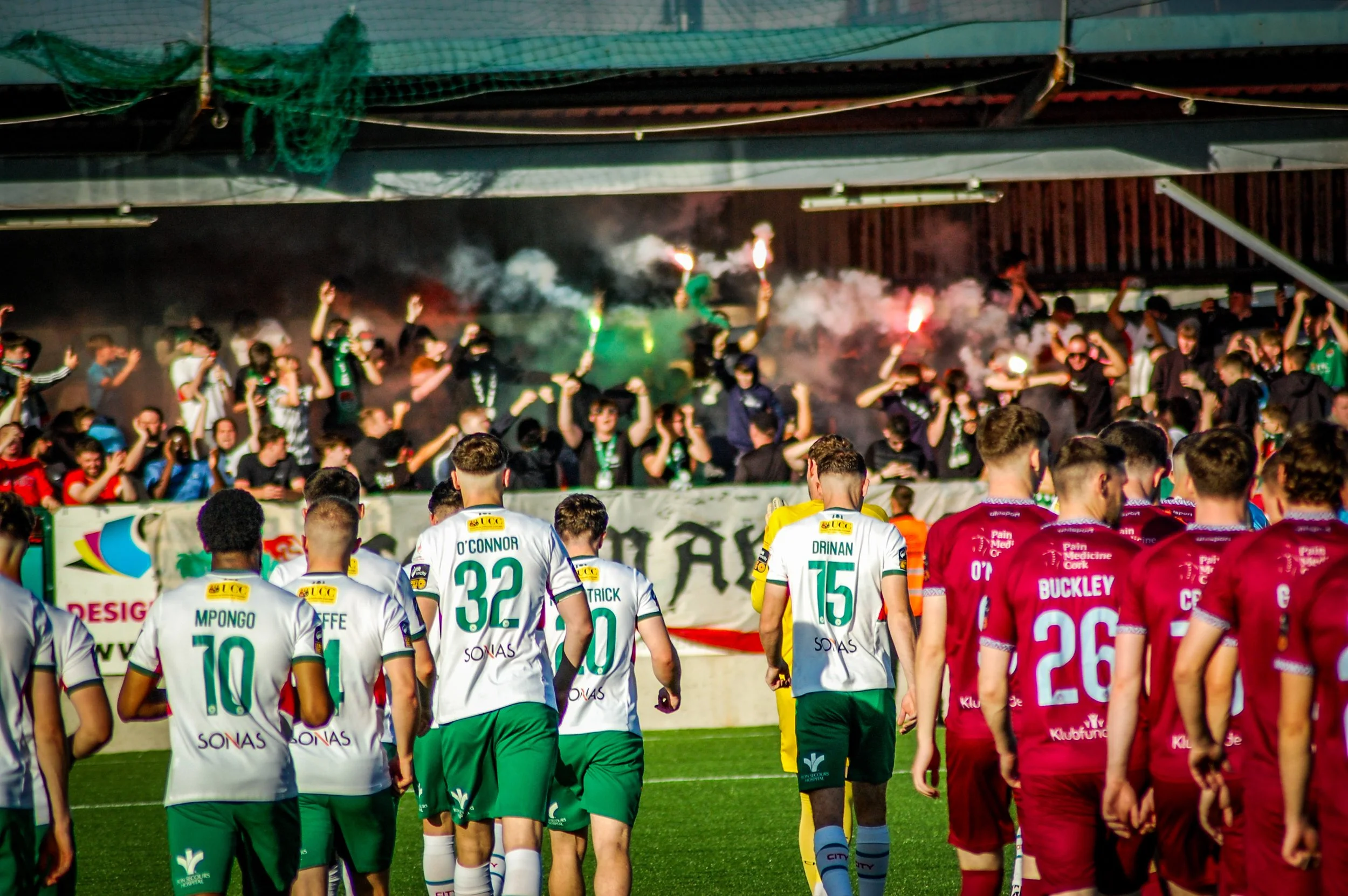
Cork City were promoted at a canter this season. Photo: Dylan Power.
Cork City FC finished the 2026 season a gigantic 19 points ahead of second-place UCD, securing automatic promotion. A trophy lift should bring elation to a fan base, but this season, Turners Cross, the longstanding home of Cork City, expected more. The endless cycle of relegation and promotion has become a sickening sight to many supporters. The fans expect to see their team at the top of Irish football once again.
Rebel with a cause
The Rebel County moniker has long been associated with the spirit of the people of Cork, thanks in large part to King Henry VII. It’s an identity that was later embraced during the Irish War of Independence. This rebellious mindset has permeated Cork’s sporting culture with an us against the world mentality fostered by supporters and players alike.
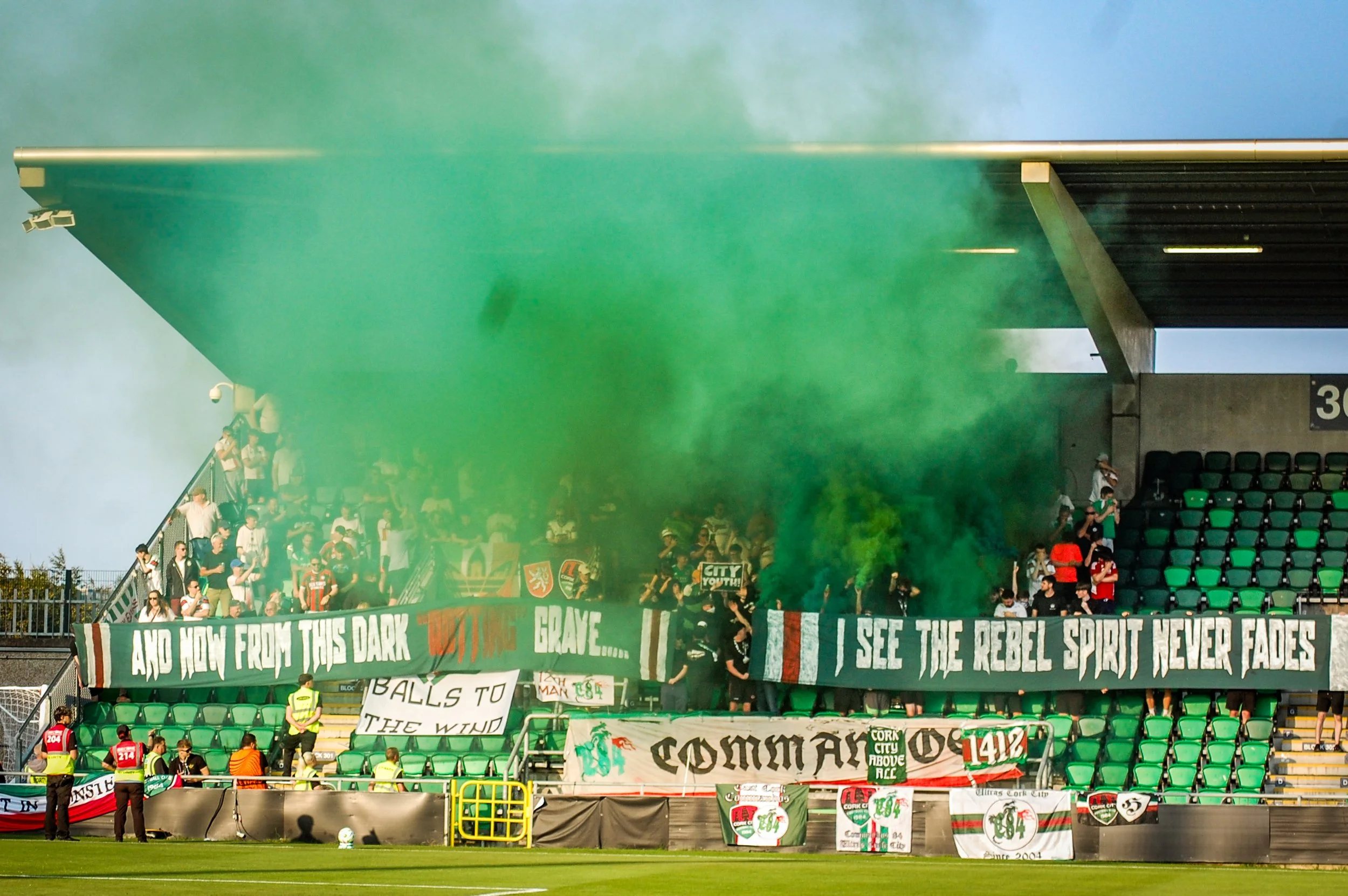
I see the rebel spirit never fades. Photo: Dylan Power.
Like all rebellious causes, there is a foundational myth at the heart of it. For Cork City, it came in September 1991, when an improbable European campaign pit them against the Bayern Munich of Heynckes and Effenberg: a true David versus Goliath story. The 1-1 draw became folkloric, most specifically for club legend David Barry, who put Cork ahead in the 26th minute. In a valiant draw, the Rebel Army had exceeded their underdog determination, establishing themselves as a force to be reckoned with.
The Rebel Army Rises
Years later, during the 2008/09 season, investment from venture capital firm Arkaga seemed well timed—the sort of backing that the club needed to grow. Grand ideas of 40,000-seater stadiums and some of the best facilities in the league were floated. As so often is the case: these ambitions were short-lived. With internal struggles and growing concern around finances, Cork City fell into examinership. A winding-up order was issued in 2010, and the club ceased operations.
But the Rebel Army fought on.
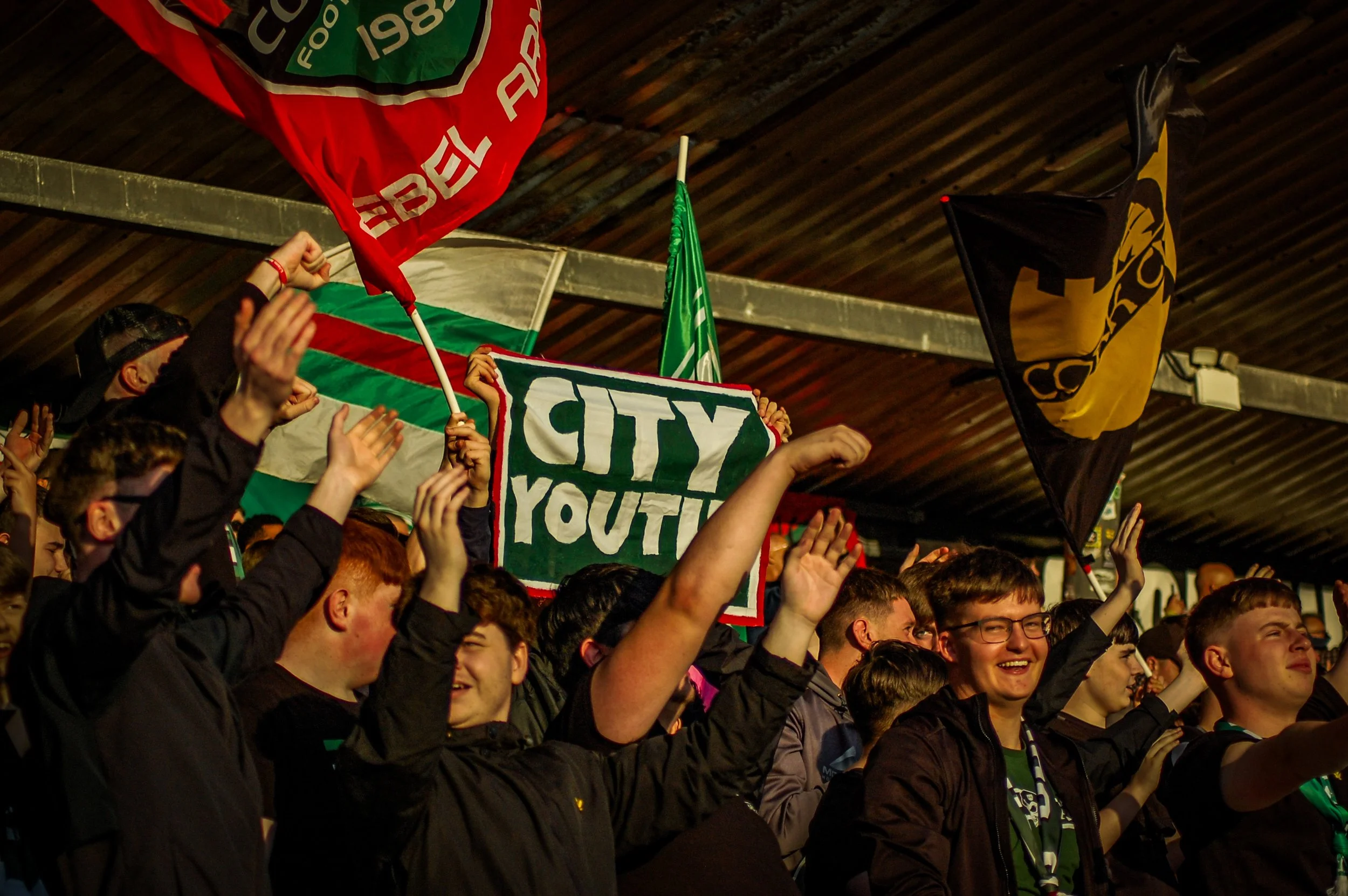
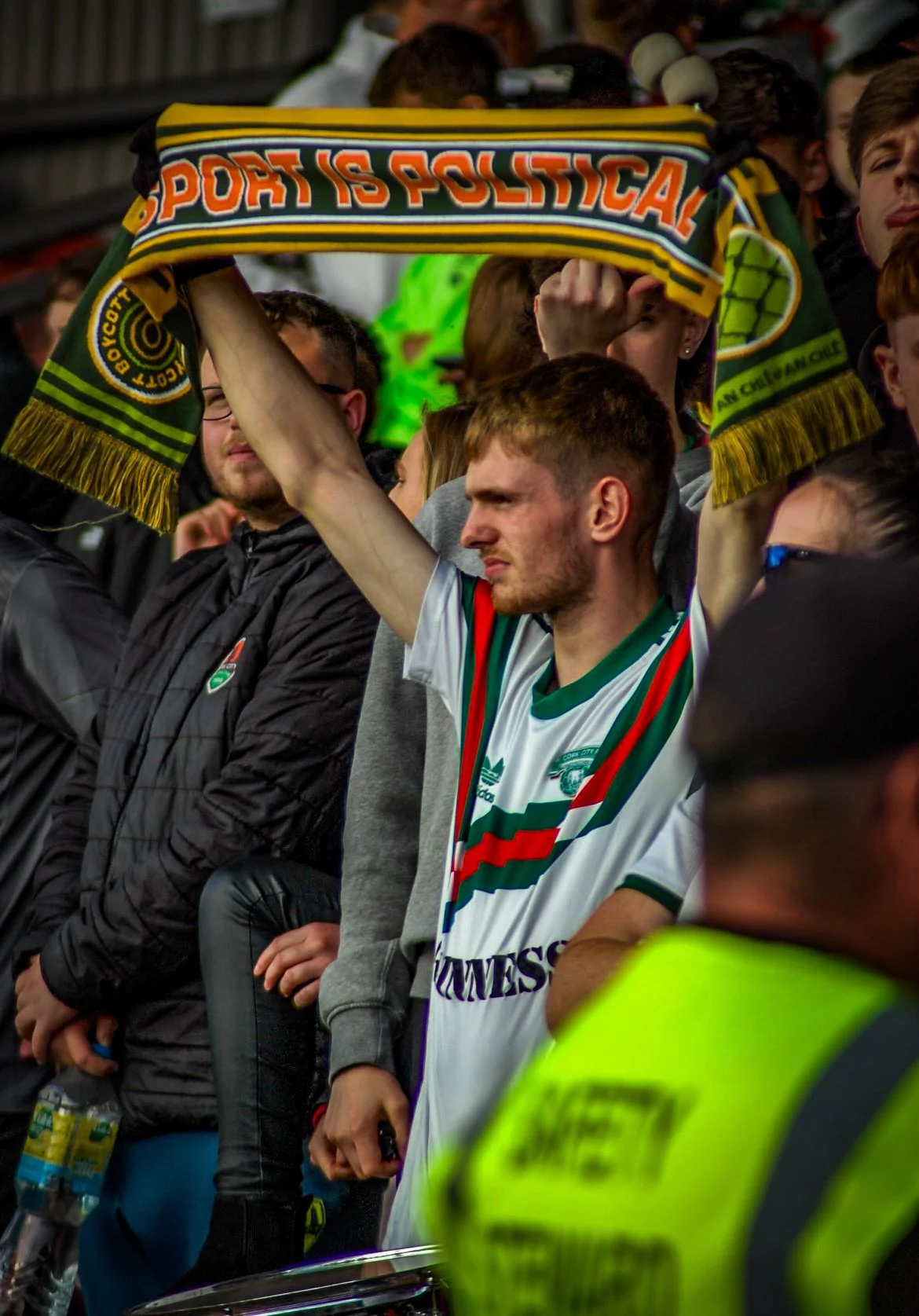
Friends of the Rebel Army Society (FORAS), a group founded in 2007 to safeguard the club’s best interests, helped to keep the spirit of the club alive during its darkest period. They refused to let years of voluntary work and their community livelihood disappear without a fight. In the face of financial difficulties and a hefty points deduction, the fan-led FORAS assumed ownership of the club and entered a Cork City team into the First Division under a new alias, Cork City FORAS Co-Op. Their decision to step in became the club’s salvation, and defined the period that would follow.
First, City struck gold under manager John Caulfield, one of the heroes that featured in that famous Bayern game in 1991.
Half a decade later, Cork City were in ecstasy. In 2016, they beat Dundalk to win the FAI Cup, a feat which they surpassed with a league and cup double the following season. The Rebel Army had reached the top of Irish football. Standout runs in the Europa League took City across the continent. “From Amsterdam to Kazakhstan, we’re going abroad,” fans would chant.
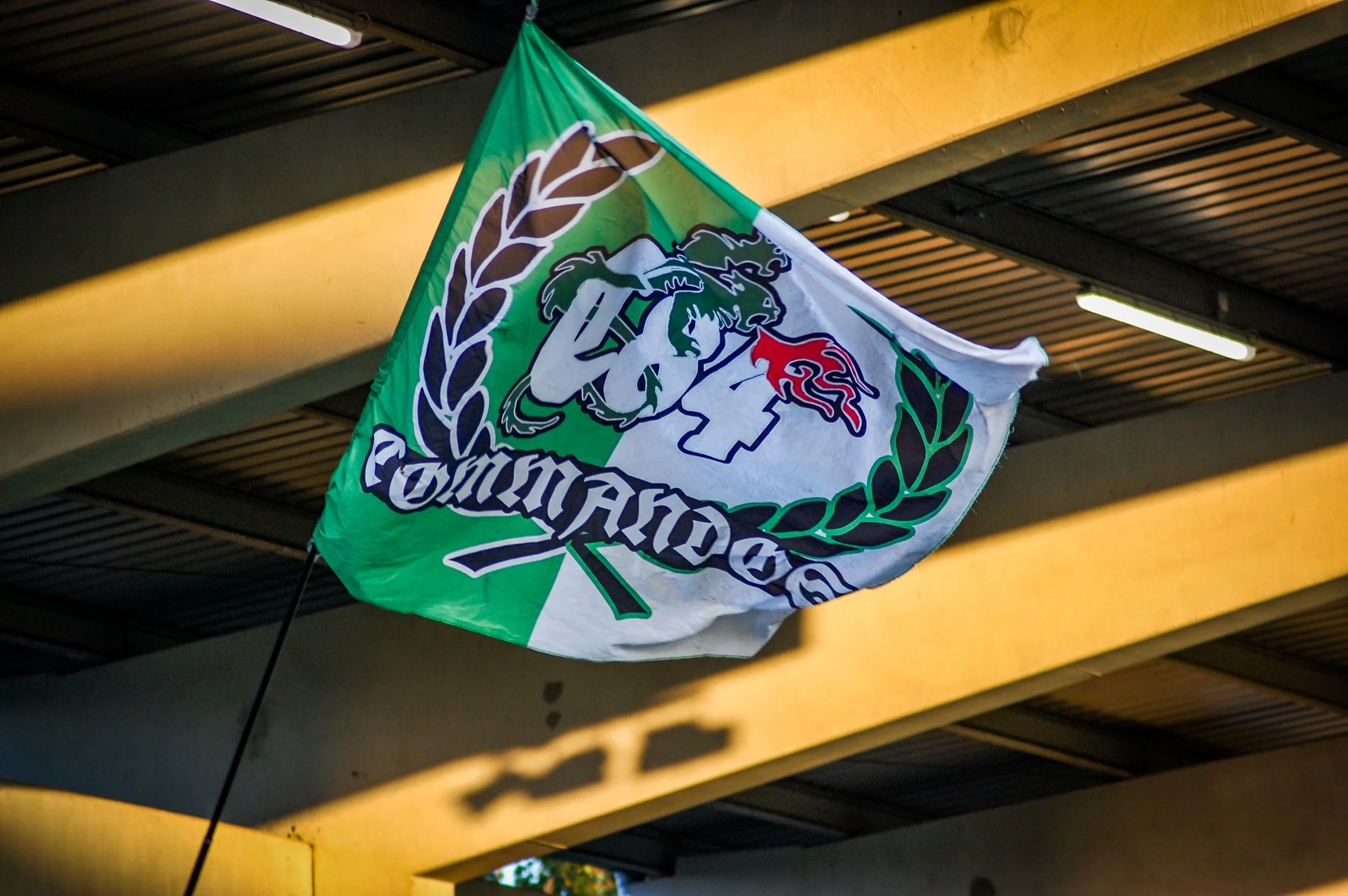
Photo: Dylan Power.
After a 15-year period, the supporter-driven stewardship under FORAS, intended at the time to be just a stopgap, underwent repeated financial and operational strain. The post-Covid years were troublesome, with a string of relegations and promotions to and from the First Division. Managers came and went. A relegation playoff defeat to fellow Munster side Waterford FC represented a new nadir. The Rebel Army had run out of ideas.
In 2022, 86% of the FORAS membership voted to approve the sale of the club by Dermot Usher, CEO of Sonas (an Irish word meaning happiness). It looked to be the perfect antidote to the stagnant cycle of frustration that defined the club’s recent history. The appointment of Barry Robson as manager in January 2026, who drove their most recent promotion push with incredible success, was the standout move of the new ownership group.
Growing the League of Ireland: A missed opportunity
A general sense of deflation on the part of the fanbase becomes clearer against the backdrop of the growth of the League of Ireland in recent years.
In 2024, attendances across the season exceeded one million for the first time in the league’s history. They grew again in 2025, as media outside of Ireland flocked to the country to discuss the great renaissance happening on Irish terraces. Amid a general sense of apathy towards modern football—the greed, the sanitised product, the cost—the trend of fans connecting with their local clubs in more authentic ways had rejuvenated the Irish game.
And this growth wasn’t confined to the top flight; attendances in the women’s Premier Division and the men’s First Division also reached new heights.
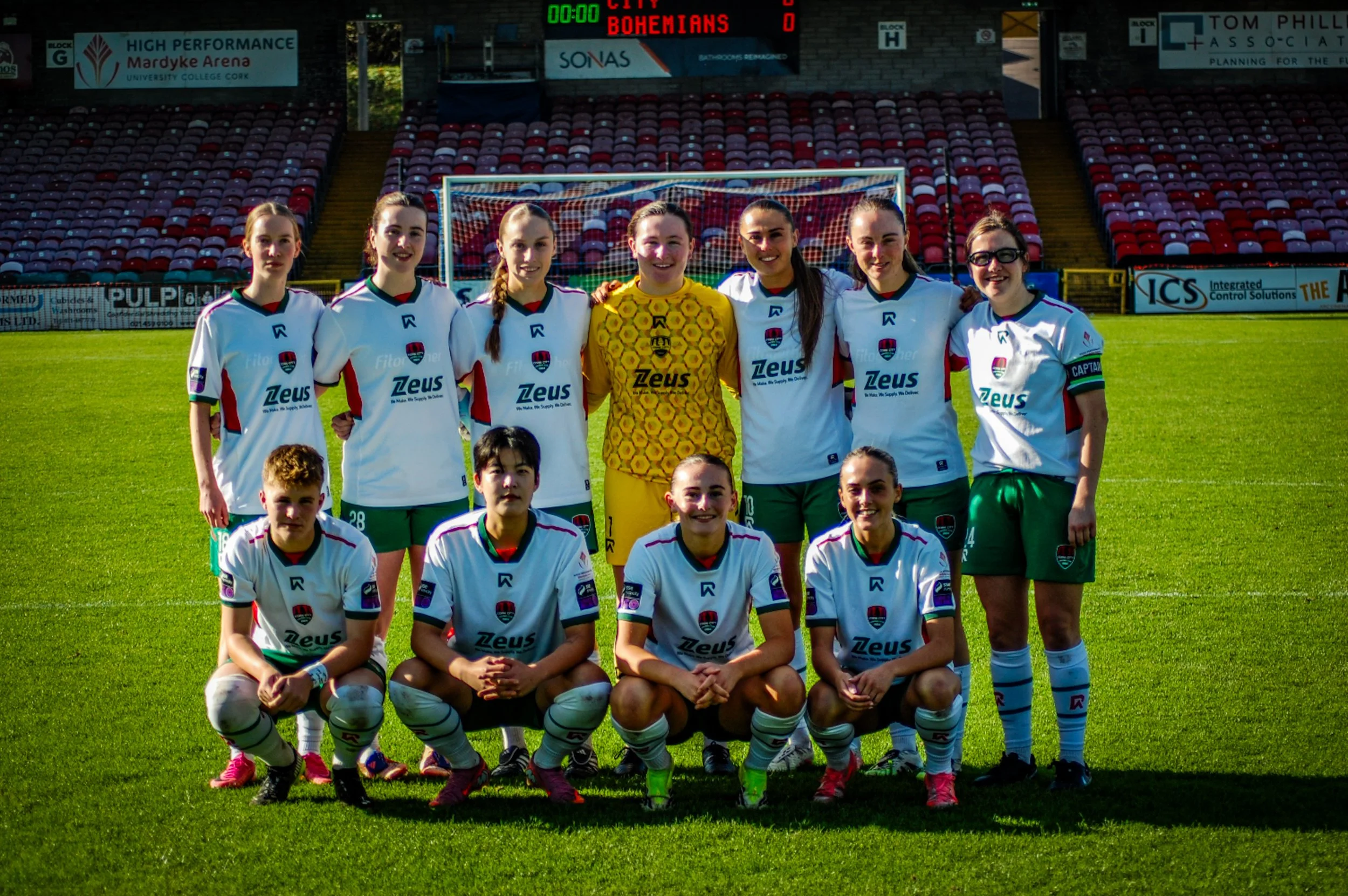
Cork City FC Women reached the 2020 FAI Women’s Cup Final. Photo: Dylan Power.
With attendances came new broadcasting and ticketing revenues, and new ways to capitalise on the country’s blossoming fan culture. The cross-pollination of culture and extravagant kit launches and collaborations with the likes Bohemian FC became routine. Irish football was, and remains, on the rise.
As Ireland’s second-largest city by population, with over half a million Rebel County residents, Cork City were well placed to take advantage of this new movement.
That appears to sit at the heart of fan grievances; a lack of clarity and ambition in the face of opportunity.
Where divisions lie
Despite this growth, Cork City (like many other teams) reported financial losses. According to Dermot Usher he invested €1.4 million into the club between 2022- 2024. But a number of supporters struggle to understand Usher's long-term vision.
For the fanbase who has seen Cork City being caught between divisions, another period of uncertainty is impossible to accept. The question appears to be whether Usher’s approach can ever meet the sporting ambition supporters expect. Promotion is fun. The requirement to repeatedly need to secure promotion, less so. It does not automatically restore trust.
Rise Together
It is a hard ask to bring Cork City back to winning ways immediately.
A fanbase that has witnessed the highs of Bayern Munich knows what the club is capable of building. Sustainability is not a sexy thing to ask for, but after years of ownership changes and sporting disappointment, it has become the minimum ask for supporters.
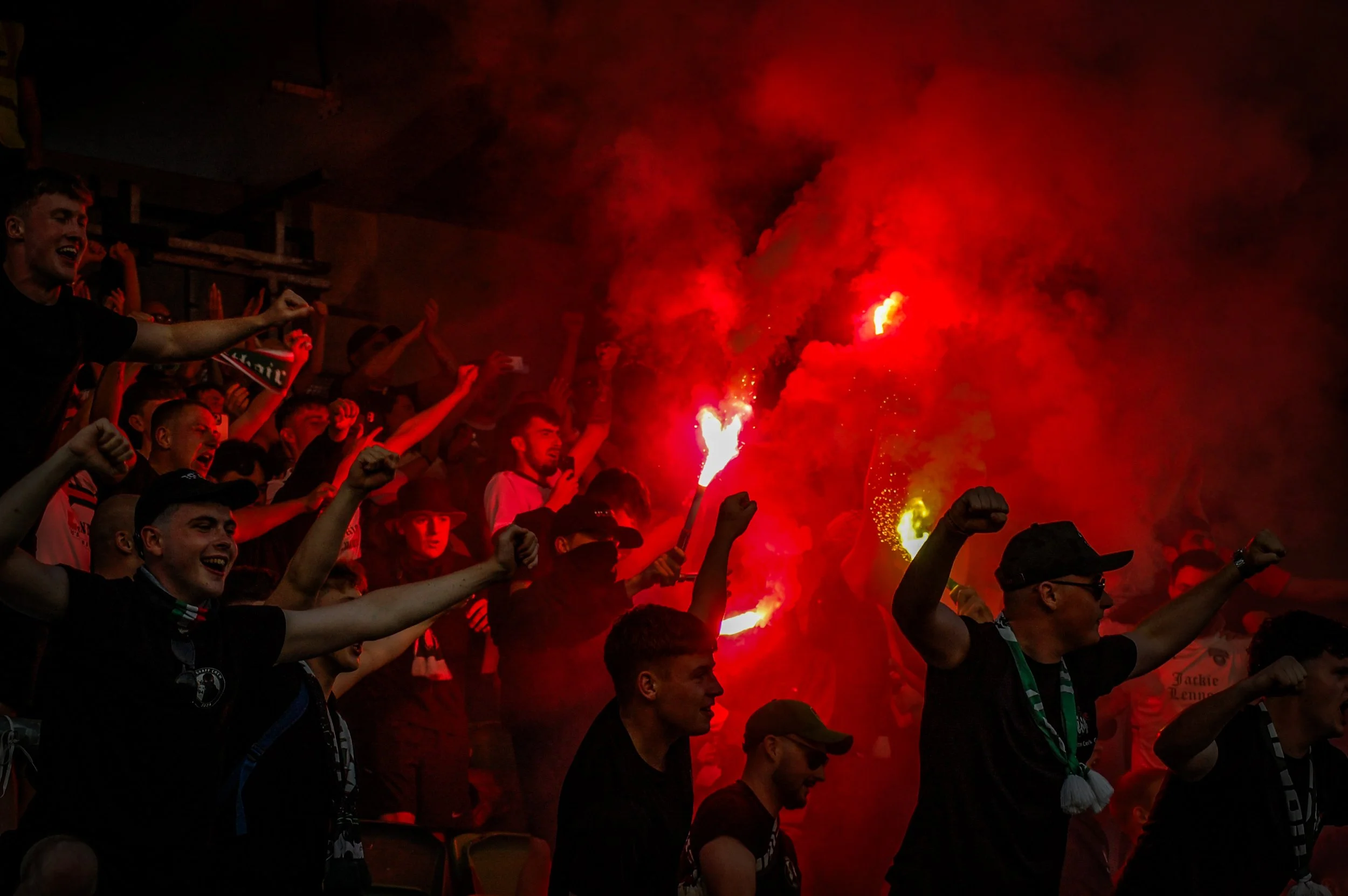
The Rebel Army spirit lives on. Photo: Dylan Power.
During recent promotion celebrations, manager Barry Robson stressed the necessity for the club to “go up as a whole city”, confronting the problems in a cohesive, united way. It means more than supporters filling Turners Cross on a Friday night, it requires an evident commitment to serving the club’s long-term interests from ownership and management.
The city of Cork and the entire Rebel County deserves a team that can sit at the top table of Irish football. One certainty remains: the resolve of the Rebel Army spirit.