
How did the culture of English football casuals find a home in one of the world's most socially conservative societies?
Long before kick-off, motorbikes flood the roads in convoys, their riders waving flags, sounding horns and wearing balaclavas. Coaches arrive crammed to capacity, their aisles overflowing with supporters, while others perch precariously on the unstable rooftops above. Around the stadium, hundreds of pedagang kaki lima sell food from gerobak, wheeled carts and makeshift stalls, while the fumes of petrol, diesel and cheap cigarettes, some costing little more than a pound a pack, battle in the humid air, forming what seems to be the very oxygen of Indonesian football.
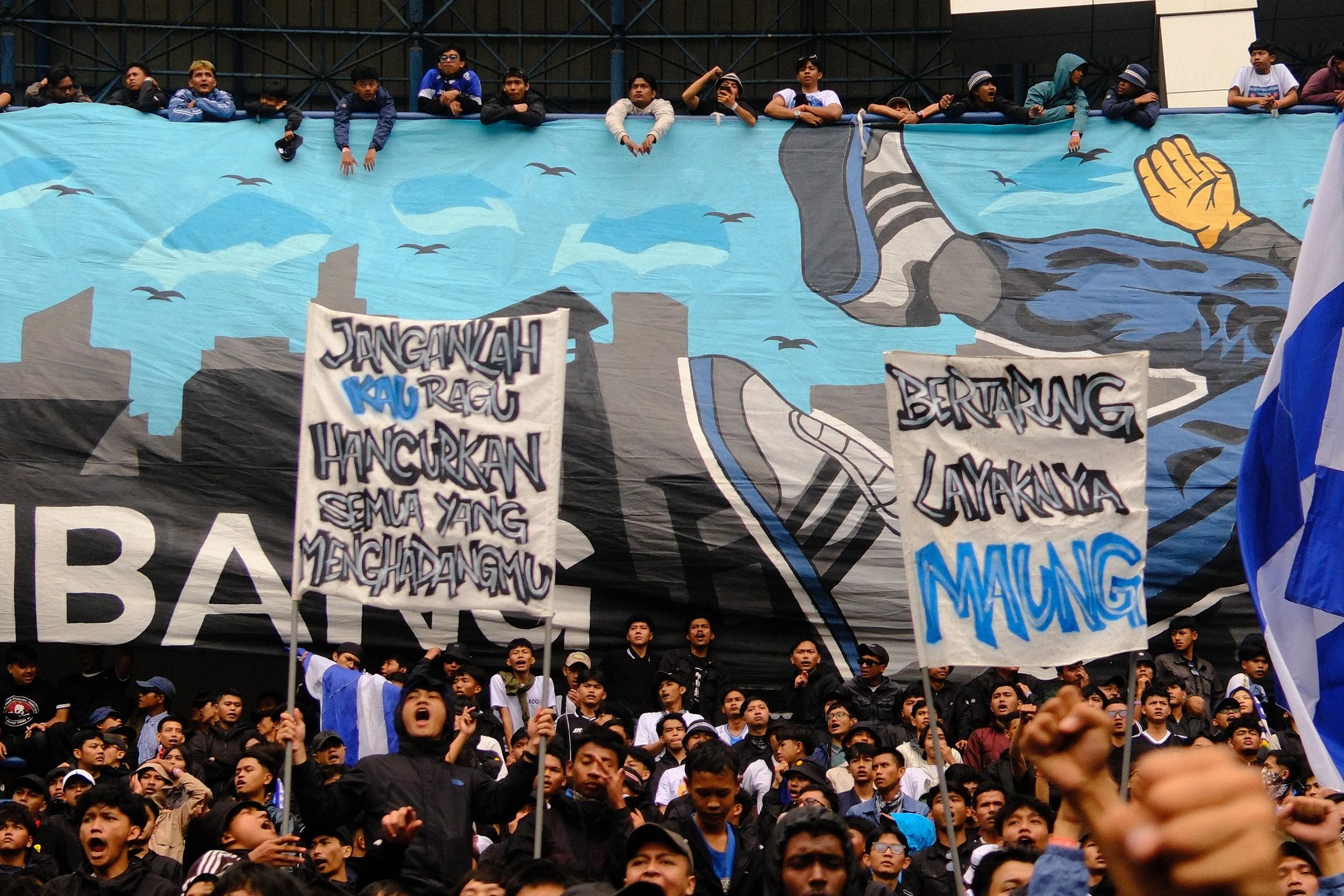
Photo: Adam Douch
In 1930, football was already doing something rather dangerous in the Dutch East Indies: bringing Indonesians together.
The game arrived with Dutch colonisers, and its early clubs and pitches reflected the racial divisions of colonial society. But on 19 April 1930, Indonesian football associations came together to establish the PSSI, led by Soeratin Sosrosoegondo. What began as a colonial pastime became something far more significant: a way to unite Indonesians under a shared identity. Fifteen years later, the country proclaimed its independence.
A turbulent political history would test that growing sense of national unity. Independence was followed by years of revolution, the anti-communist mass killings of 1965-66 and the subsequent authoritarian rule of President Suharto, whose 32-year presidency ended amid mass demonstrations in 1998. From resistance to colonialism to the fall of Suharto, in the second half of the 20th century, Indonesians repeatedly took to the streets to demand change.
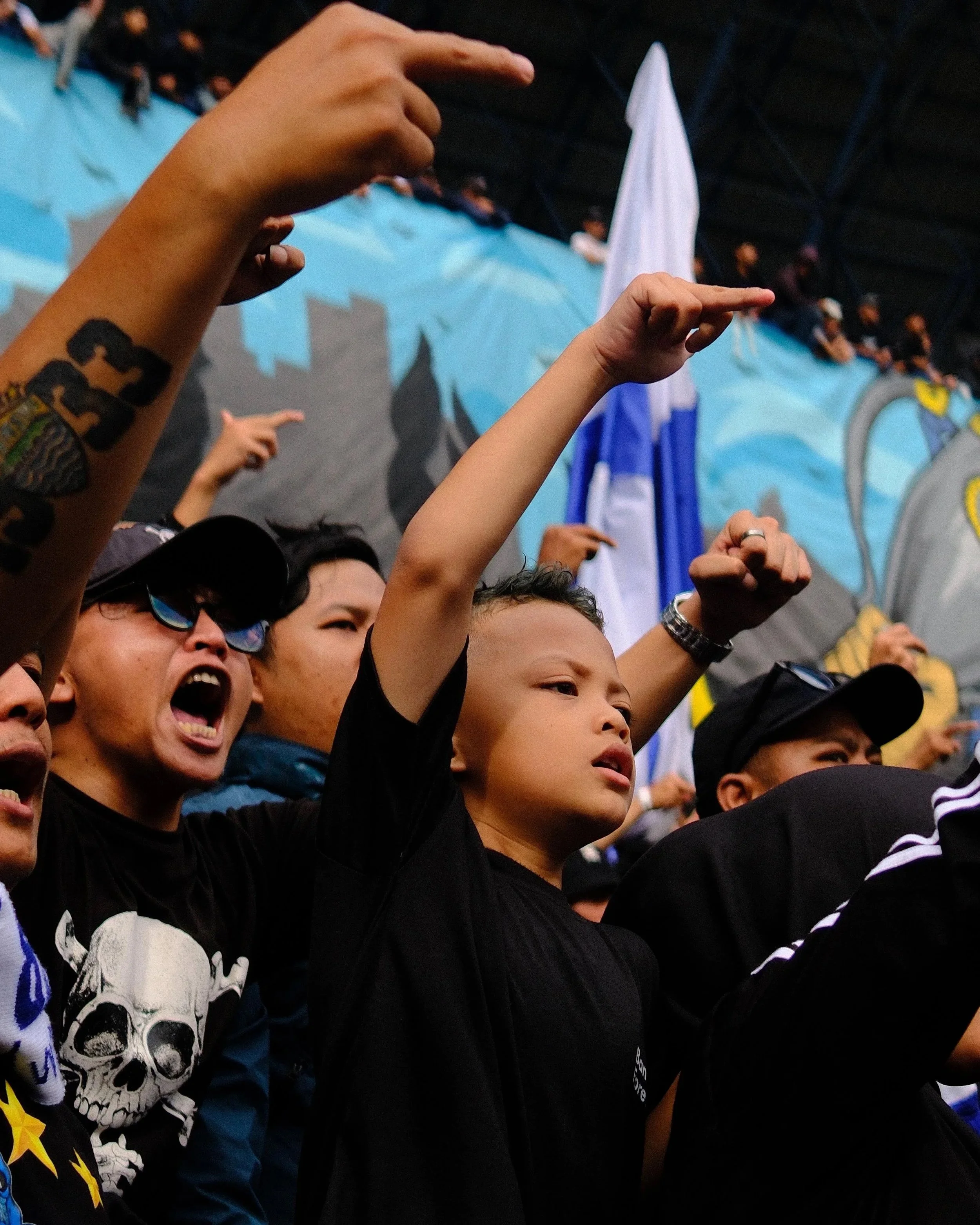
Photo: Adam Douch
Modern football terraces are not a continuation of those political movements, but they offer a new pathway for the expression of solidarity and defiance.
Persib Bandung, from West Java, is one of Indonesia’s most successful teams. Their rivalry with Persija, from Jakarta, is known as Indonesia’s El Clásico, and it represents the high watermark of citywide tension and passion on a matchday.
Today, beneath the noise and apparent chaos lies a remarkable degree of organisation. Thousands arrive and gather in their respective korwil, or regional supporter groups. Bahasa and local dialects bleed out; others prepare tifos and choreographed displays, while younger supporters, their faces concealed by balaclavas, roam the surrounding concourses in protection of their territory.
It’s an experience that draws heavily on English football’s terrace culture.
Northern Wall, one of Persib’s most prominent supporter movements, offer a window into how the motifs of English hooliganism have retained their meaning, just in different surroundings.
Stone Island compass badges, Fred Perry polos and Adidas samba's are ubiquitous: the unmistakable uniform of football casuals. Away from the terraces, local gigs featuring Indonesian bands covering Oasis and other Britpop classics evoke the atmosphere of Britain's 1990s music scene, only for the humidity, roaring motorbikes, and chaotic streets of Indonesia to shatter the illusion.
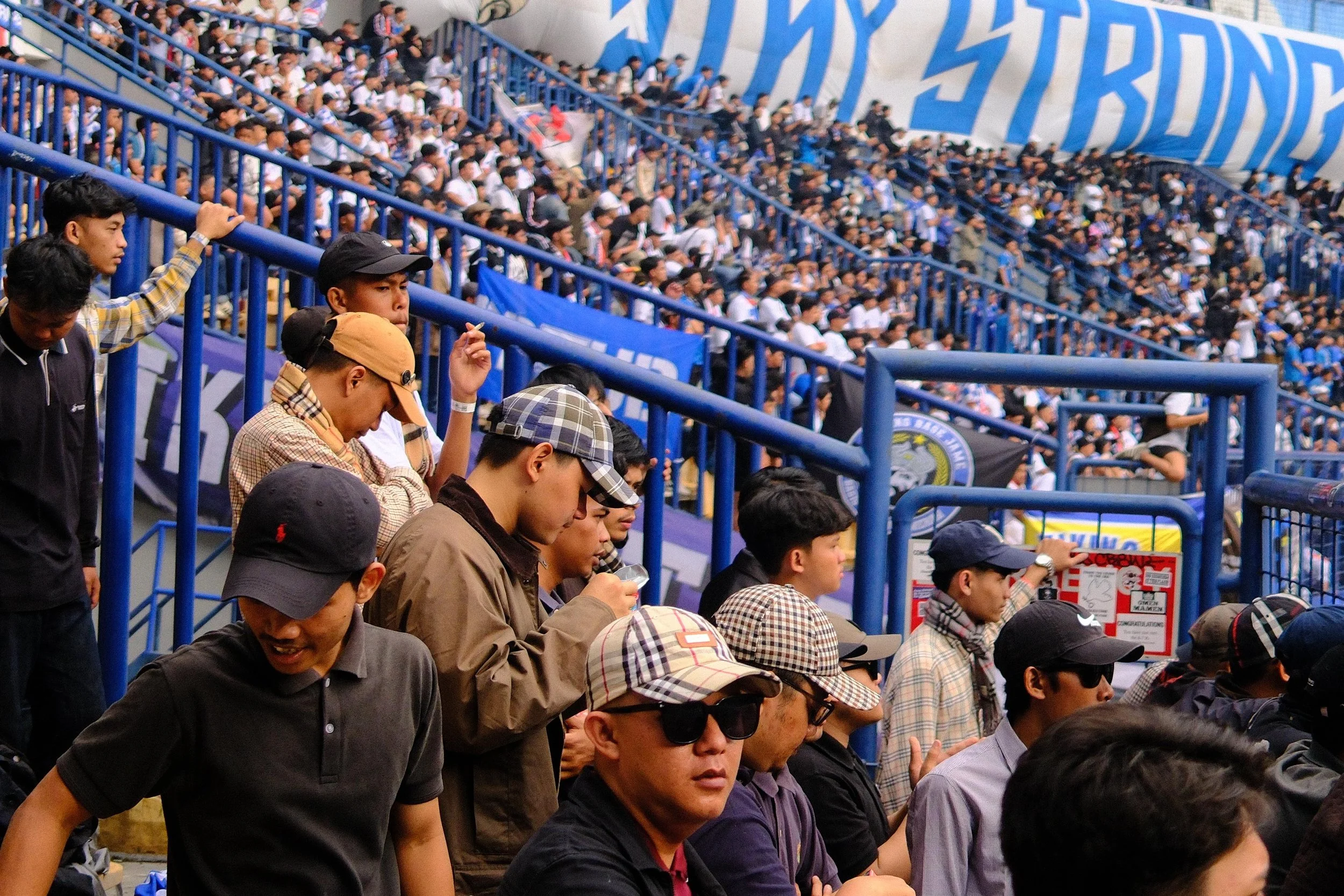
Photo: Adam Douch
For a country frequently characterised by its religious and social conservatism, these subcultures present an intriguing contradiction. Around the stadium, these contrasting identities are visible within metres of one another. Supporters kneel on prayer mats to perform salat, while just a few steps away, others discreetly share bottles of arak, a local spirit.
Faith and rebellion are not necessarily opposites, nor is Indonesia uniformly conservative. Its football terraces simply expose the different identities that coexist within a changing society.
While smuggling alcohol into stadiums represents a relatively harmless act of defiance, other influences from abroad have introduced a darker dimension to Indonesian supporter culture. Among them is Eastern Europe's ustawka, a practice in which rival hooligan firms arrange fights on neutral ground. In May 2026, media reported an organised confrontation in Central Java, between Bandung Hooligans, associated with Persib, and Persija's Tiger Head.
But Indonesia's football violence rarely follows an agreed set of rules.
It can begin with a rival shirt spotted in the wrong neighbourhood or a motorcade intercepted on its journey home. Stones and makeshift weapons replace chants, motorbikes lie abandoned, and police vehicles and civilian cars are set ablaze. Streets that moments earlier were filled with singing descend into turmoil as supporters scatter for safety. Between 2012 and 2018, multiple supporters lost their lives in violence surrounding the Persib-Persija rivalry, with further deaths associated with clubs elsewhere in Indonesia.
Each tragedy followed a familiar cycle of public outrage, calls for reconciliation and, eventually, renewed hostility.
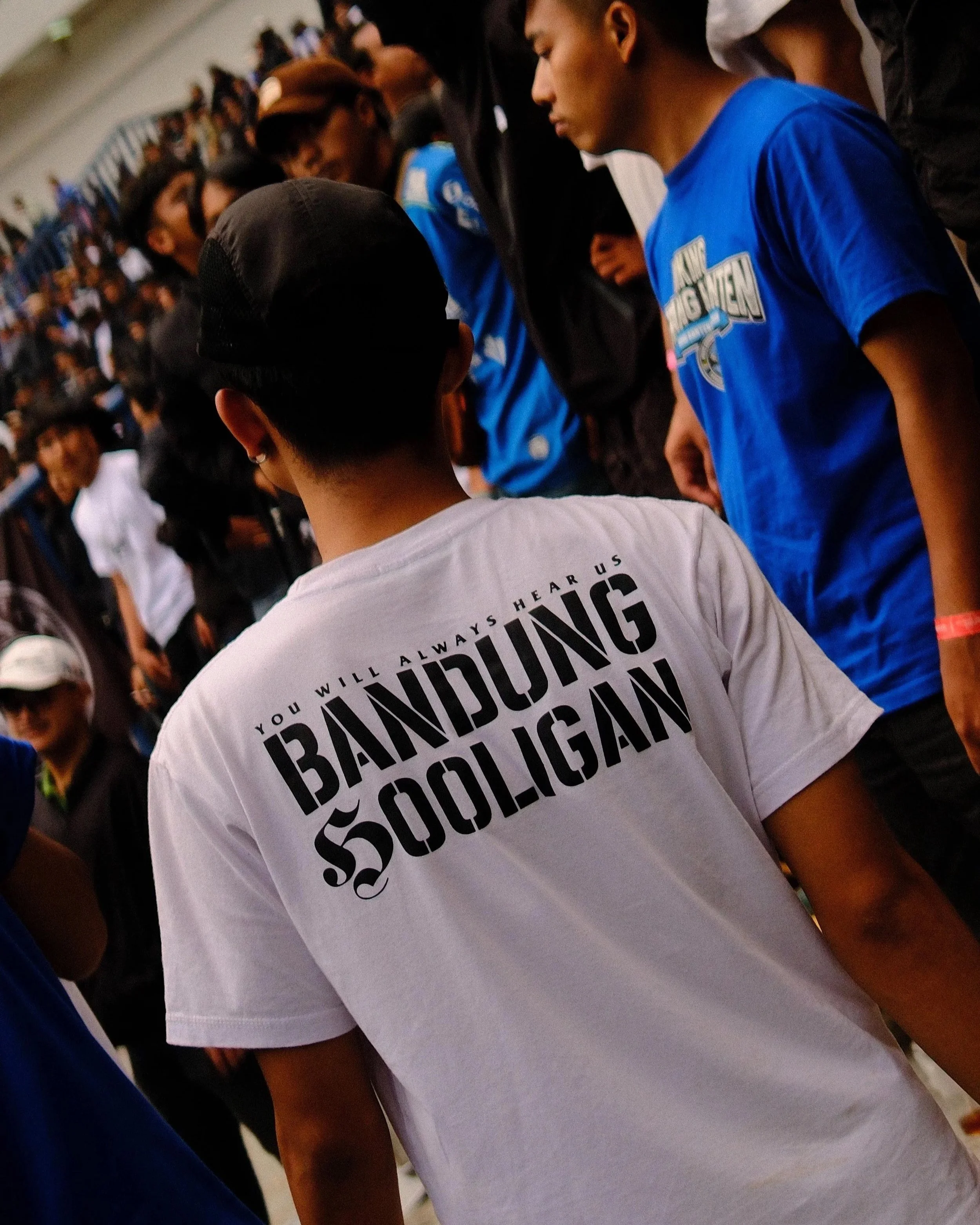
Photo: Adam Douch
Then came Kanjuruhan.
On 1 October 2022, Arema's 3-2 home defeat to bitter rivals Persebaya Surabaya in Malang, East Java, ended in catastrophe. With away supporters already banned, some home fans entered the pitch after the final whistle before police fired tear gas towards packed stands. Panic spread as spectators desperately pushed towards narrow exits. Parents searched for children; supporters collapsed in the crush, and by the end of the night, 135 people were dead, including 43 children.
This was not an organised hooligan confrontation. It was a disaster in which the authorities entrusted with maintaining order helped turn a football match into one of the deadliest stadium tragedies in history. For a while, the Kanjuruhan disaster appeared to force Indonesian football into a reckoning. Matches were suspended, away supporters barred nationwide and stadiums reopened under severe restrictions. The tragedy shook the foundations of the game, leaving supporters to question whether the passion that defined Indonesian football had come at too great a cost.
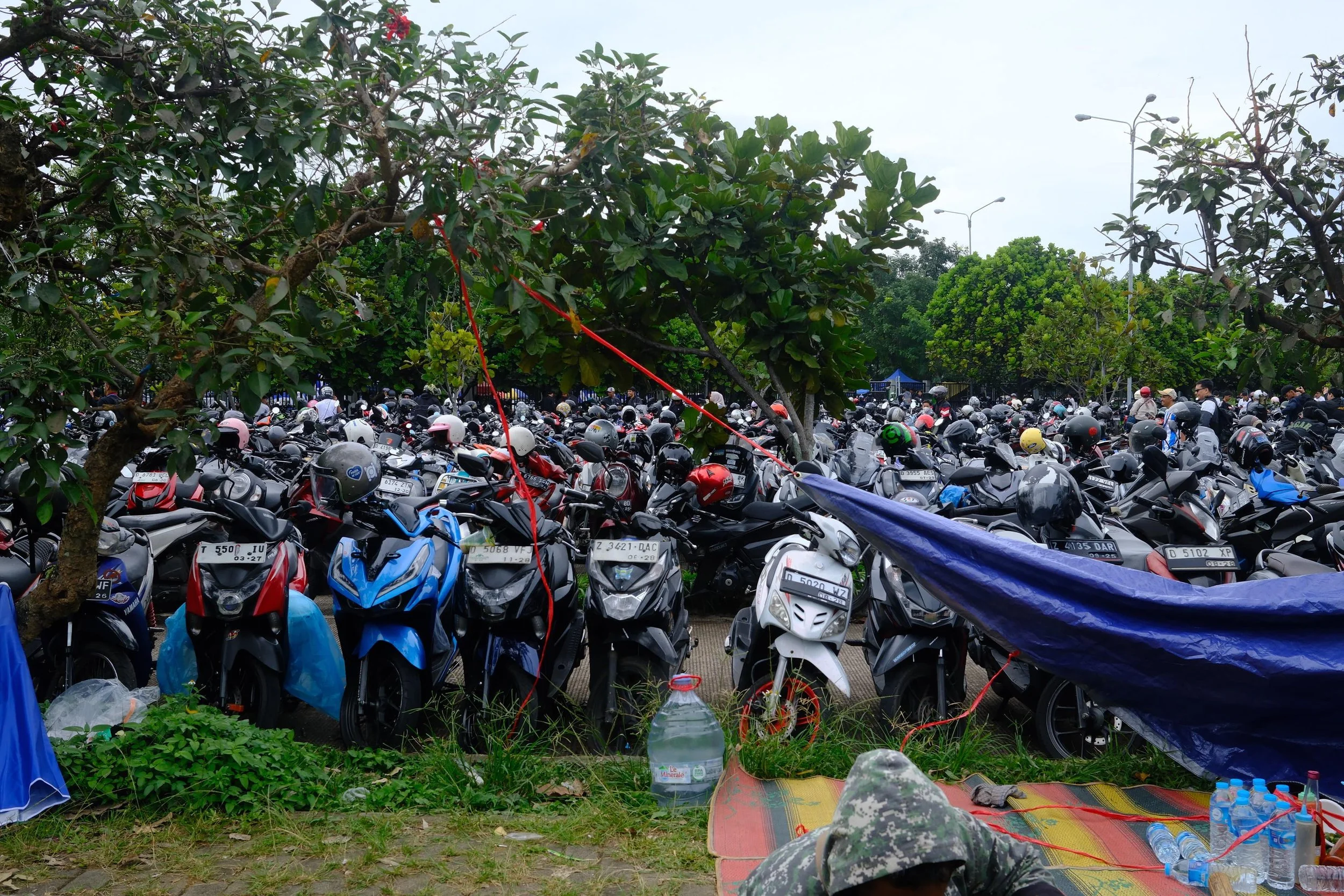
Photo: Adam Douch
In May 2025, during Arema's first match back at the renovated Kanjuruhan, stones shattered the windows of visiting Persik Kediri's team bus, injuring a coach. A year later, vehicles burned outside Jayapura's Lukas Enembe Stadium following Persipura's failed promotion bid. Different cities, different circumstances, but the same haunting images of broken glass, burning vehicles and crowds descending into chaos.
Despite these setbacks, Indonesian football is still cautiously moving towards reconciliation. For the 2026/27 season, away supporters have started to return under strict conditions. The country's fiercest rivalries, including Persib-Persija and Arema-Persebaya, remain closed off for away fans. So, after four years of separation, the gates are slowly reopening, one fixture at a time.
Perhaps the real question is not how British terrace culture found its way into conservative Indonesia, but why it felt so familiar when it arrived. For generations, football offered Britain's working-class communities an escape from the routines and hierarchies of everyday life: somewhere to be heard, to establish an identity and become part of something greater than themselves.
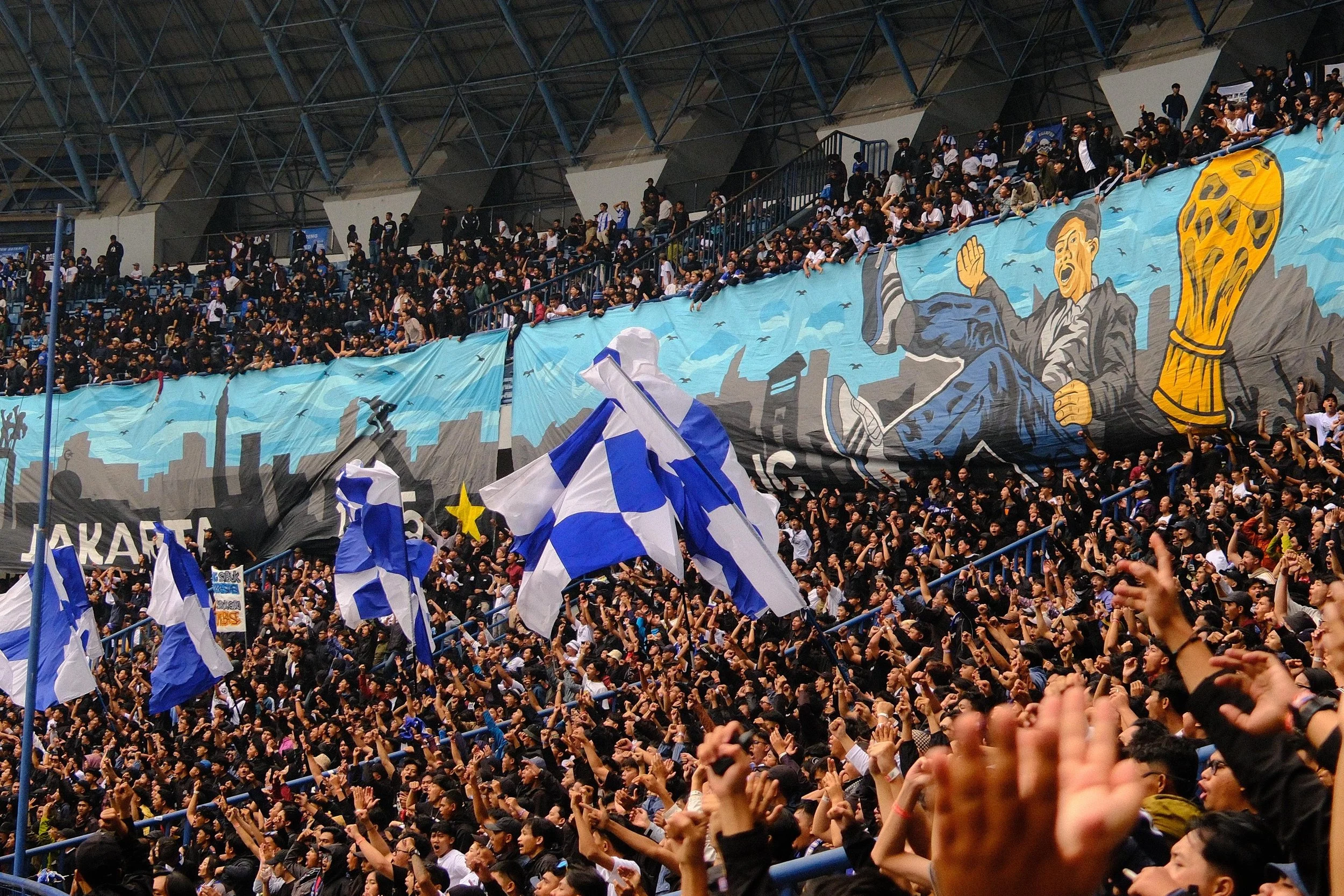
Photo: Adam Douch
In Indonesia, where family, religion and tradition shape much of society, the attraction is not so different.
The challenge for Indonesian football today is whether it can preserve the rawness that much of English football has lost, without perpetuating the culture of violence that overshadowed the darkest days of the hooligan era.