
De André, Bresh, Sanremo: Genoa’s unrivalled musical history
"I would have written a love song for Genoa, but I haven't because to write a song, you have to maintain a certain detachment," the late Italian songwriter Fabrizio De André once reflected.
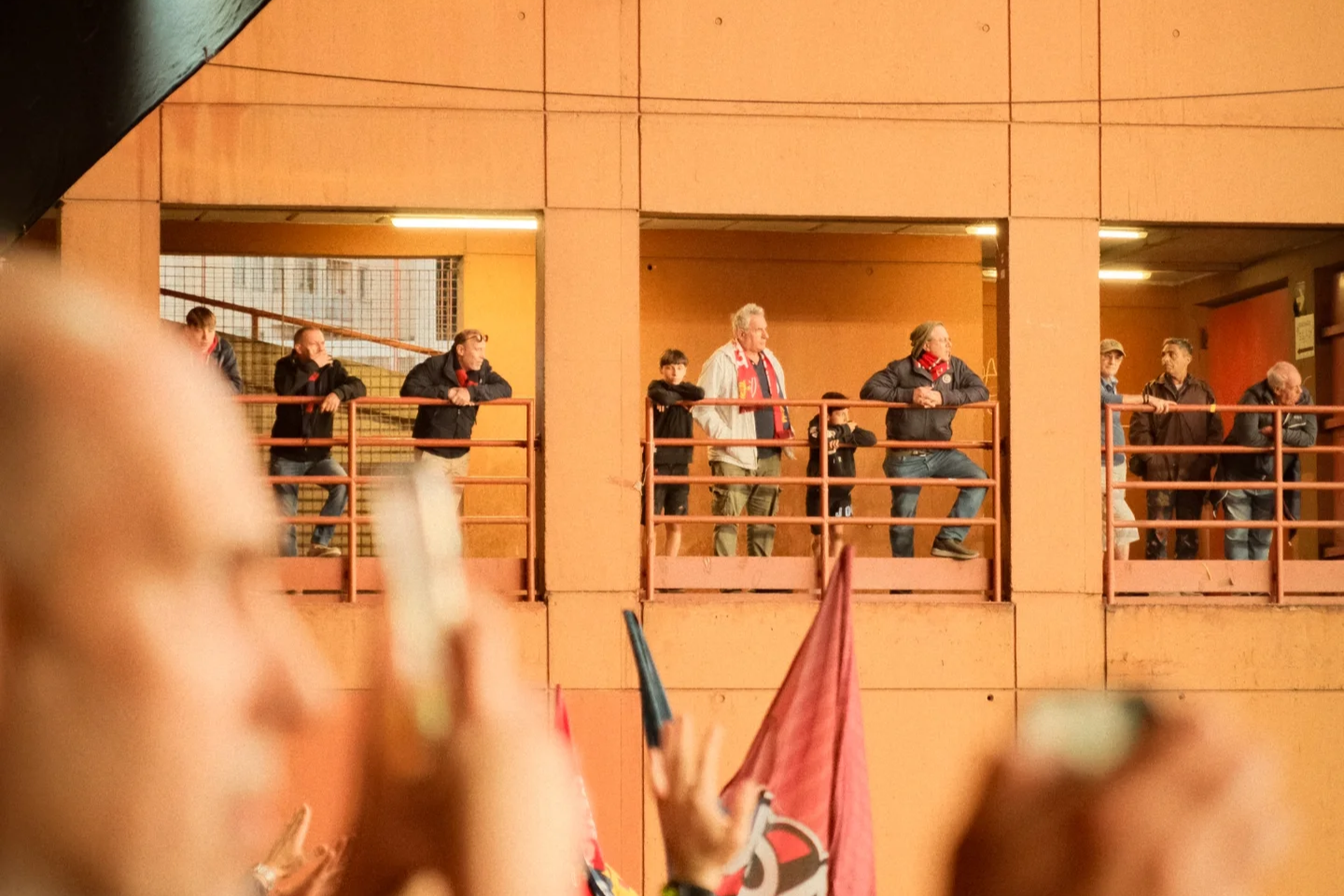
A proud Genoese and an even prouder Genoa fan, De André’s songs brought his city’s rich tapestry to life, often through the eyes of those living at the margins of society. 27 years since his passing, his music remains a poignant soundtrack to both the city and the club.
A flag bearing De André’s iconic profile is ever present on the Gradinata Nord at the Stadio Luigi Ferraris.
On the 25th anniversary of his death, the same terrace produced a giant red and blue tifo bearing a mosaic of the late songwriter carrying the message Per Sempre Amico Fragile (Fragile Friend Forever), a nod to the title of one of his songs.
Football and music are ubiquitous in the Ligurian capital, as deeply embroidered in the city’s fabric as its maritime traditions and its cuisine.
Walk through the carruggi–the old town’s narrow and winding streets that were once lined by warehouses close to the port–and you’ll stumble upon murals dedicated to Genoa, Sampdoria and to some of the city’s great artists.
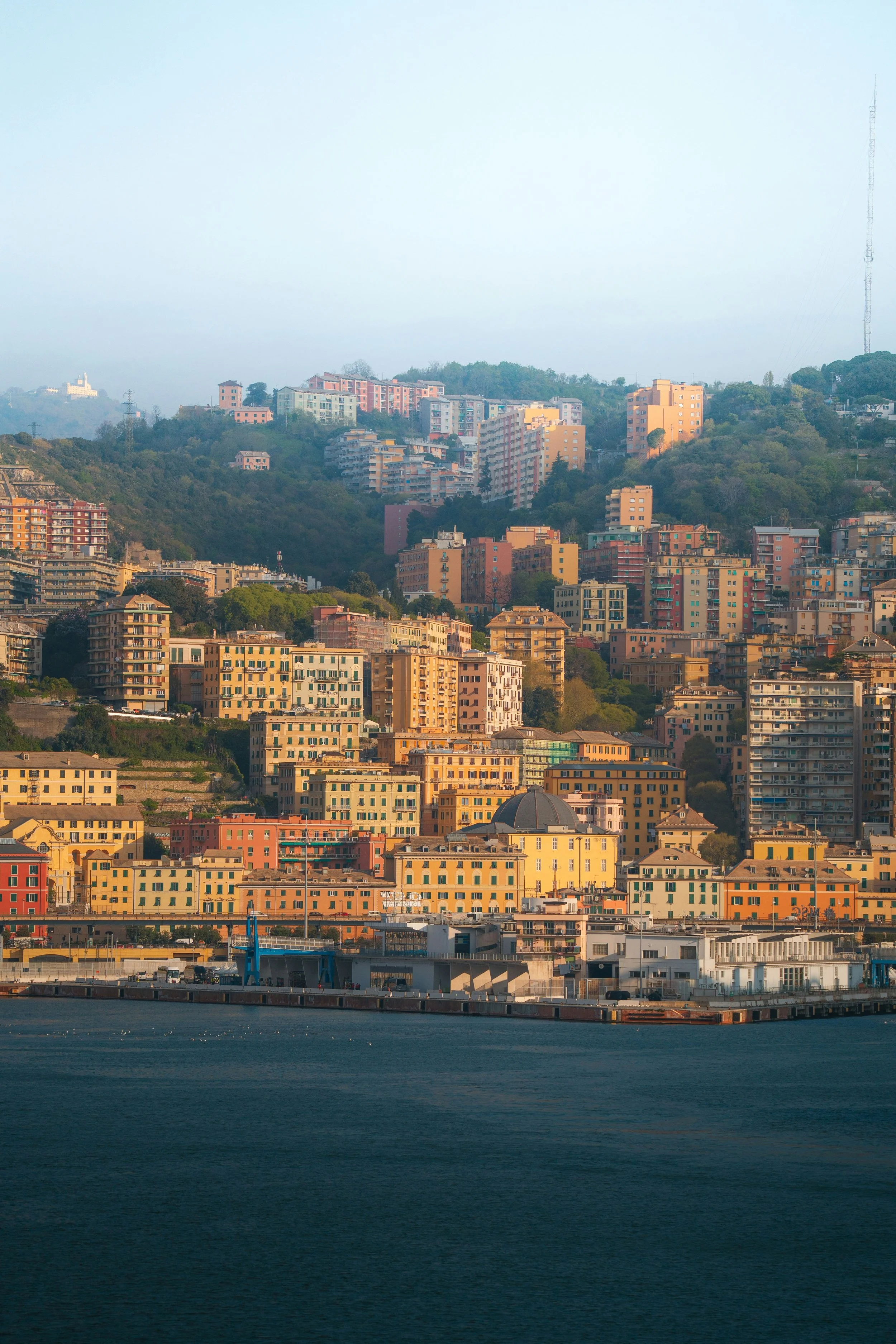
Photo: Andrei Popescu
Perhaps it should be no surprise. The city is after all home to the oldest football club in Italy and to its own cultural movement—the Genoese School.
Developed in the city in the early 1960s, the movement represented a deep break with traditional Italian music and what artists perceived to be “sanitised pop-music”.
Drawing from the influences of French singers like Charles Aznavour, American folk artists such as Bob Dylan and Beat Generation literature, exponents of the Genoese School zeroed in on existentialism.
De André was one of the most prominent exponents of the Genoese School, along with the late Gino Paoli, a fellow Rossoblu fan, Bruno Lauzi and Luigi Tenco, whose death by suicide at the Sanremo Music Festival in 1967 shook Italy.
De André sung of drunkards, sailors, prostitutes and those he described as “defeated by life”. Hardly the kind of upbeat stuff radio stations would fight over, yet it resonated and still resonates within Genoa.
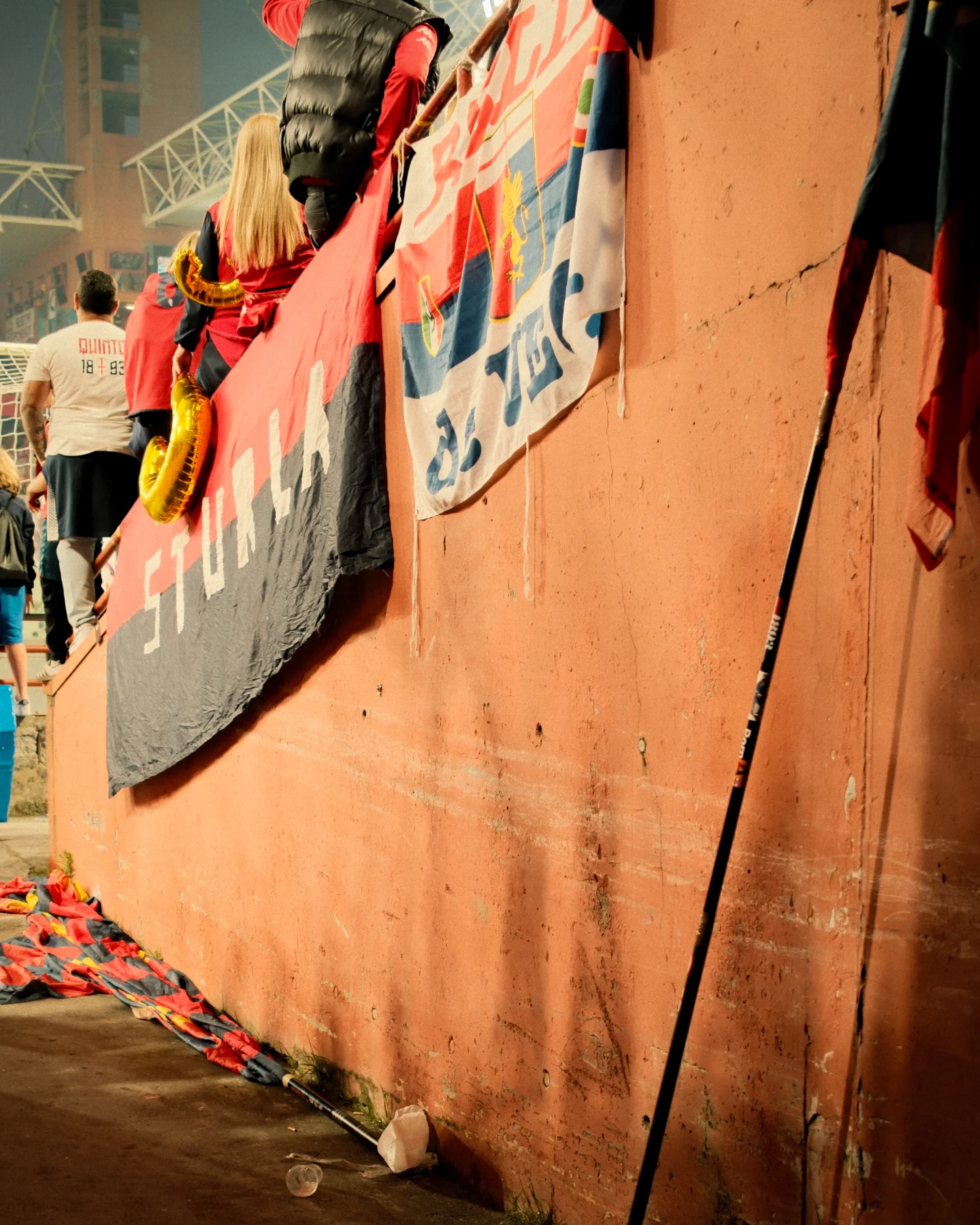
Photo: Vittorio Moro
A refuge for artists
“You have to realise what it means to be Genoese,” Daniele Gaccioli—or Gaccio, a regular on the Gradinata Nordat Marassi for 25 years, tells The Culture Division.
“We are different - more melancholic than others—and that only makes our bond with this place even stronger.
“Simple food, music, the sea, and football: that is what this city lives for.
“Genoa has always been a heartland for great artists, and the fact that their music resonates throughout the stadium is the ultimate symbol of that bond."
To an extent, the Genoese School is also a modern phenomenon as a number of young artists have carried on the tradition—chief among them Bresh, whose track Guasto D’Amore is played ahead of kick-off at every Genoa game.
If De André represents Genoa’s musical past, Bresh is its present.
Released in 2023, the song, whose title roughly translates to Love’s Glitch, became a hit on streaming platforms and was swiftly embraced by Genoa fans.
Ostensibly a love song, its lyrics address Genoa and the Gradinata Nord where “my stomach flutters and my voices trembles when I see Il Grifone”
You don’t have to be of a Rossoblu persuasion to be left in awe by the sight of Marassi singing the tune a cappella before kick-off. In fact, you don’t even have to speak Italian.
Footage of the ground in complete darkness bar for the flares in the Gradinata Nord belting out the song ahead of a game against Palermo three seasons ago is absolutely spine-tingling.
It helps that Bresh can often be found in the Gradinata Nord himself, once holding a banner bearing a photo of De André, as documented by Genoa’s Instagram account.
“Bresh is an incredible guy and a true symbol of what it means to be Genoese,” Gaccio says.
“The fact that he’s always there in the Gradinata has earned him everyone’s respect; he’s a brilliant artist, but above all, a massive Genoa fan."
Faber, as De André was colloquially known, features more prominently than most of his fellow artists on walls across the city.
A mural outside the Ferraris portrays him strumming the guitar, cigarette hanging off the corner of his mouth.
In white, four words stand out on the red and blue background.
They are the opening lyrics to Creuza de Ma (in Genoese, Cobbled Sea Path) the title track of his eponymous album and his biggest musical gambit, an entire record in Genoese dialect, released in 1984.
When his producer voiced concerns the lyrics would be incomprehensible to anyone outside of Genoa (Ligurian dialect and specifically Genoese are effectively a foreign language to the rest of Italy) De André countered that the music was so compelling listeners would grasp the meaning anyway.
Look beyond the artistic bravado and it was a riposte that summed up Genoa’s essence.
By their very nature, port cities are geographically distinct from their in-land counterparts. But the differences extend beyond the landscape. Port cities are simultaneously open and yet quietly inward looking.
Genoa is no different. The club leans heavily into its local roots, while simultaneously championing its English heritage.
Return the borrowed flag
A giant banner outside the Stadio Luigi Ferraris welcomes visitors to “O campo do Zena,” (in Genoese, Genoa’s Ground) while last season’s third kit was an homage to the club's English roots.
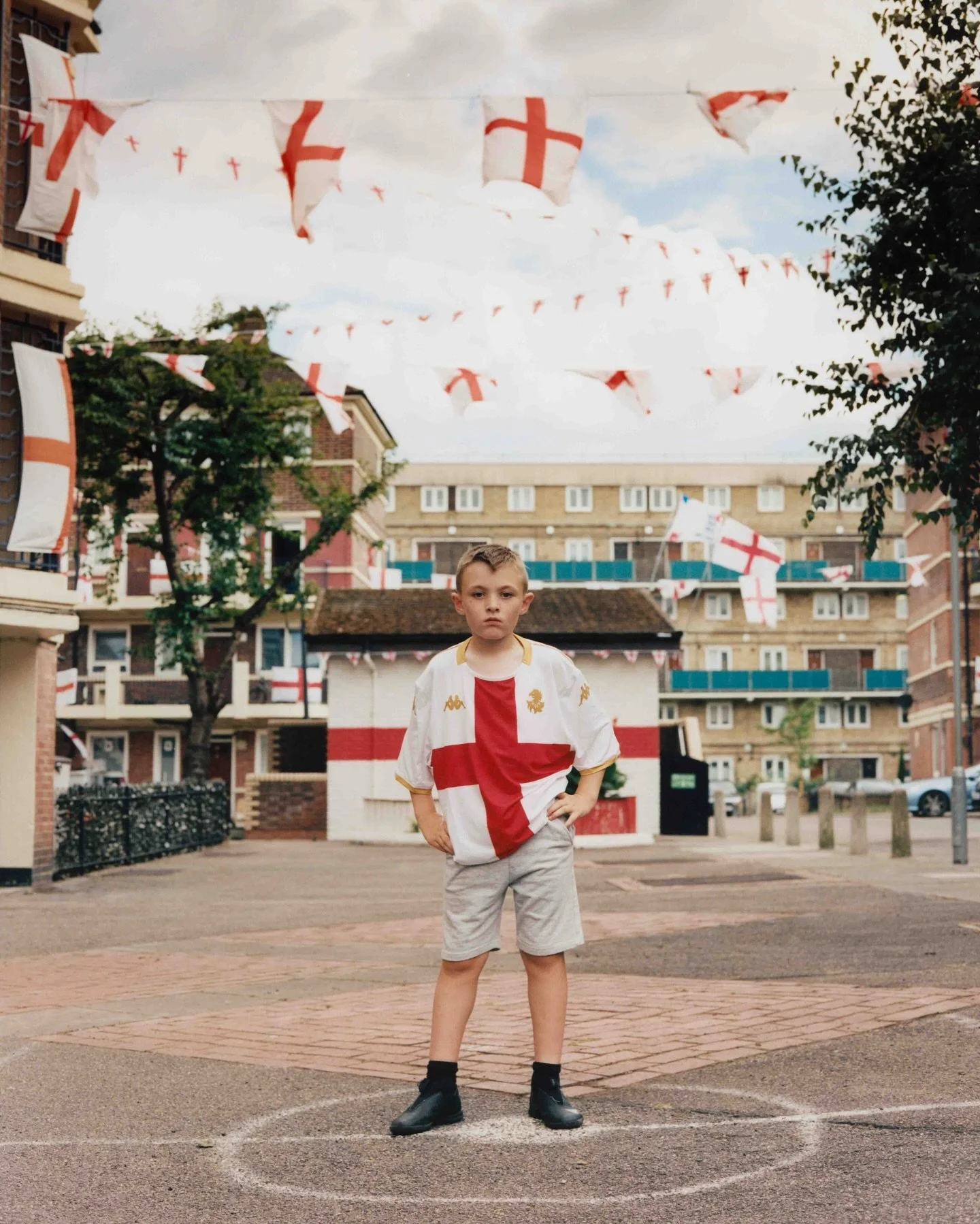
The shirt features a giant St. George Cross, the flag symbol of Genoa as a maritime republic as far back as the 12th century and subsequently adopted by England.
The club was founded by English immigrants as Genoa Cricket and Football Club, which explains why it retains the English spelling of its name.
To mark St George’s Day on April 23, Italian brewer Ceres set up a tongue-in-cheek campaign urging England to “return” the flag they “borrowed” over two centuries ago.
The shoot for the Rossoblu third kit, meanwhile, was carried out in Hackney, in east London. The connection with England is far from casual and fostered through the clever use of social media, which has helped the club extend its reach far beyond the city’s borders.
Photo: Sam Alexander Gregg
“The club has transformed the stadium and the kit into canvases for the city's culture,” explains Giovanna Liconti, director of the Genoa Museum.
“Genoa is far more than a football club—it is a cultural vessel for the city, where music and the terraces speak with one voice."
The club’s Genoese and English roots merge at the Ferraris, the perfect stage for the city’s deep love of music and football. Marassi as it’s referred to after the neighbourhood in which it sits, is unlike any ground in Italy. It is what Italians describe as uno stadio all’inglese—an English-style stadium.
There are no curvas here, just four stands very close to the pitch with the two famous Gradinate, flights of steps behind each goal resembling the English-style ends.
The feeling of watching football in England is only strengthened by a banner reading “You’ll Never Walk Alone” that runs the entirety of the Gradinata Sud when Genoa are at home.
Aptly, Gerry and the Pacemakers’ most famous hit rings around Marassi before kick-off, just as it does at Parkhead and Anfield.
In the quarter-finals of the 1992 UEFA Cup, Genoa became the first Italian club to win away against Liverpool and You’ll Never Walk Alone has been used ever since.
One of those experiences
Like parts of the city itself, the stadium looks slightly dated. Its red walls and white girders have been unchanged since they were installed for the Italia ‘90 World Cup and the same goes for the rest of the ground.
A major refurbishment is on the cards, but unlike AC Milan and Inter, Genoa and Sampdoria will be staying put.
To anyone who’s ever watched either play at home, it would be inconceivable to even think otherwise.
To witness Creuza De Ma being played at Marassi is a curious experience, and not just because the song with its melancholic melody makes for an incongruous juxtaposition to the ear-splittingly loud Euro trash that echoes around most Italian grounds long before kick-off.
The lyrics—about sailors and fishermen returning to shore after a long time at sea—aren’t belted out as one may expect, rather quietly sung over the hushed silence that briefly descends over the ground.
As the giant red and blue flags sway in the Gradinata Nord and scarves are stretched, watching this from the press box feels like intruding on something special.
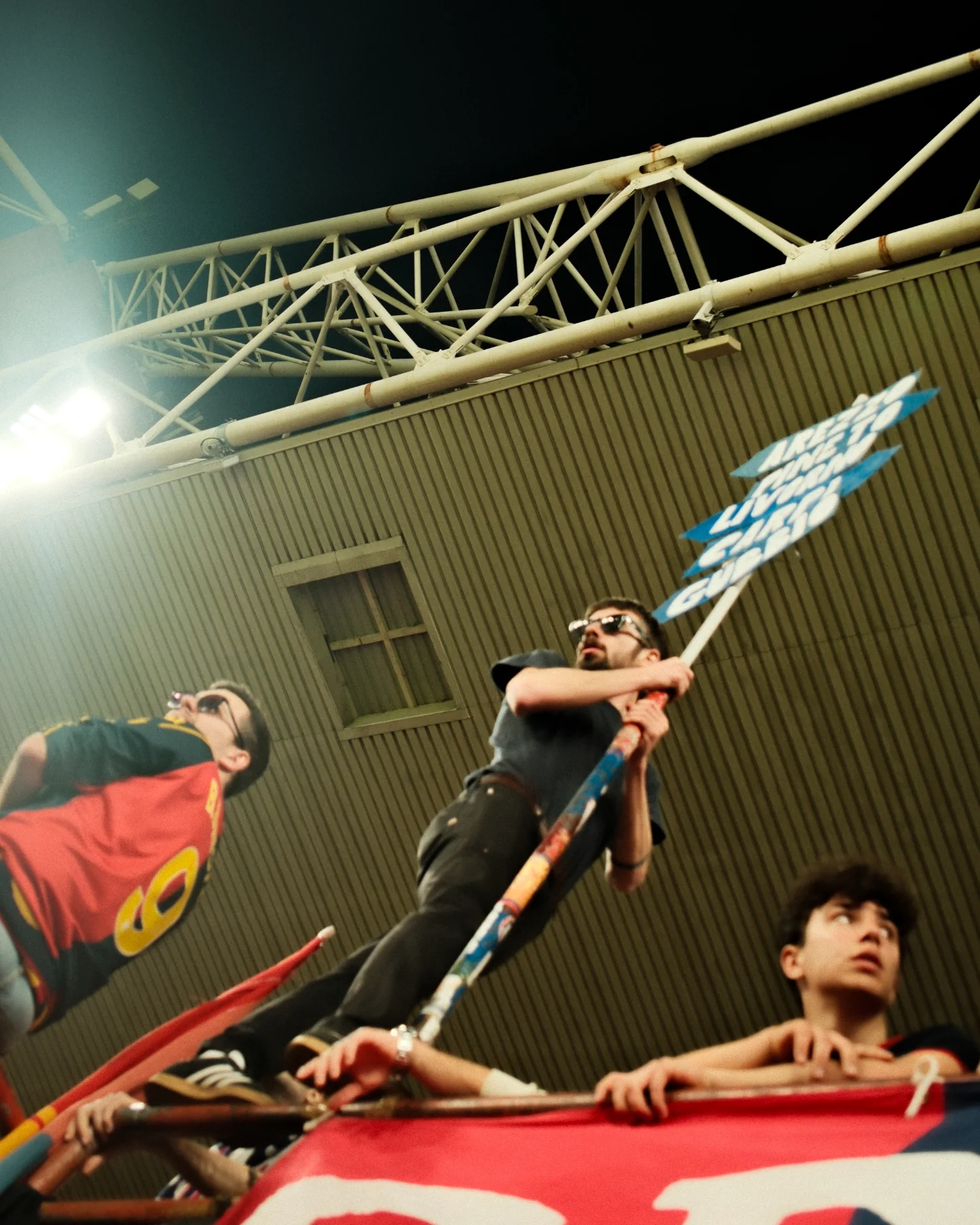
Photo: Vittorio Moro
For those in both Gradinate, being here matters. The songs matter. This, you feel, matters. Not the 90 minutes ahead, not next week. The here and now, the sense of being part of something bigger.
“Football is the most secular of faiths,” De André once reflected.
“It’s the need to align ourselves with a party, which is symbolised by images, by a colour, but which claims to be supported by a tradition and a culture different from those of others.
“Being a fan is born from a somewhat childish, but nevertheless human, need to identify with a group.”
De André got both Genoa the city and the club, Gaccio explains.
“Singing his songs in the stands is our way of paying tribute, ensuring his memory lives on,” he explains. “It’s an act of love.”
In Italy, a strong bond links music and football in Naples and Rome. The same can be said of Argentina and Brazil, where tango and samba have long wrapped their arms around football and vice versa.
And yet, Genoa feels different.
"The bond between Genoa, the city itself, and its music is a fundamental part of its identity, with roots that stretch back generations,” says Liconti.
“Football and music are two of the great passions of the people, and in Genoa, they have always been naturally intertwined."
“Even without knowing the heritage, anyone entering the Ferraris quickly realises that music in Genoa is not a mere backdrop, but integral to the identity of both the club and the city,” Liconti continues.
“It is a bond that defies explanation—it must be experienced firsthand."
Even so, Genoa isn’t a destination for stereotypical football tourists. The Rossoblu may have nine Scudetti to their name, but their most recent league title came over a century ago, long before Serie A’s inception. Yet, despite the lack of success, support remains unwavering.
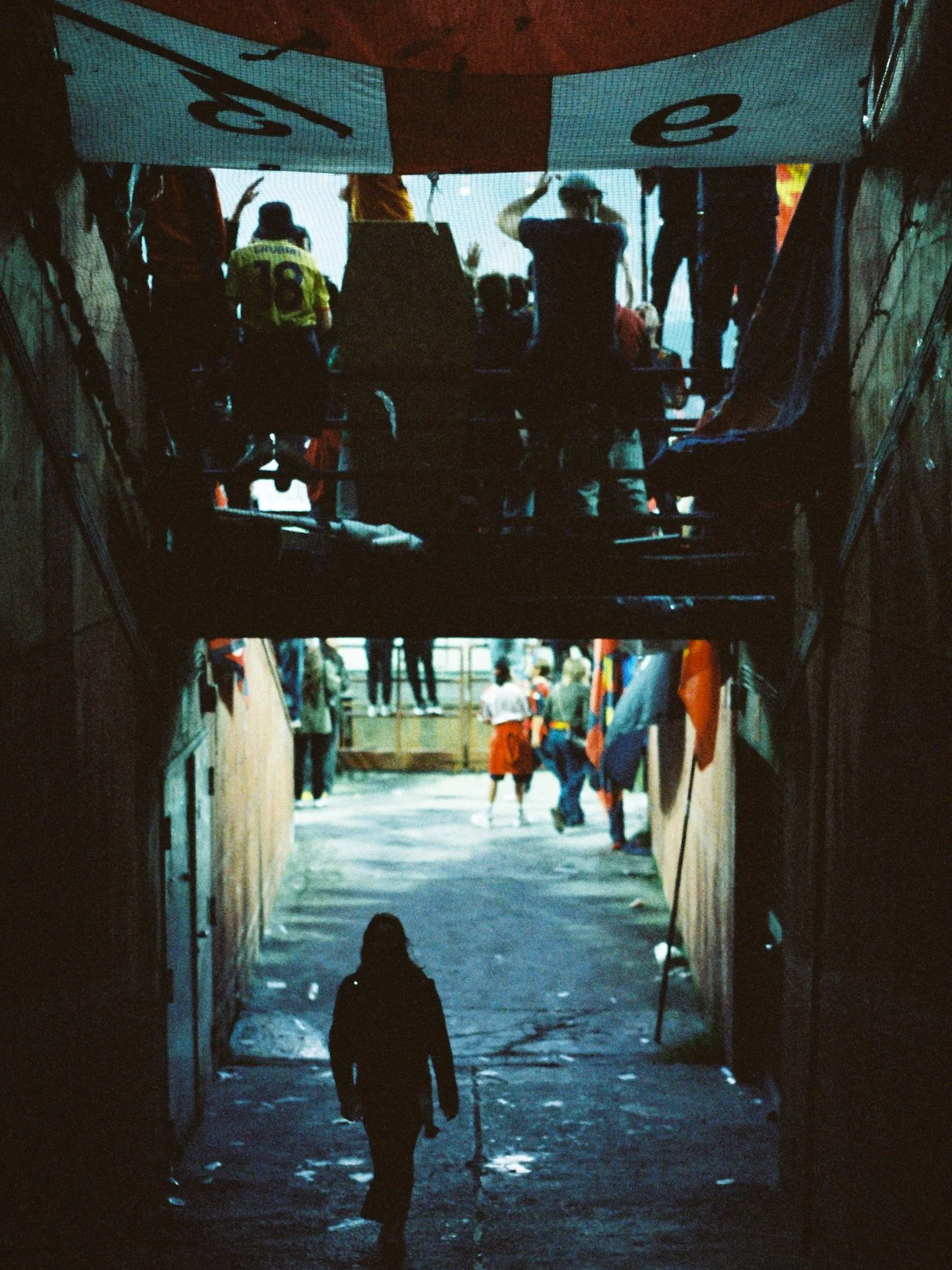
Photo: Vittorio Moro
Il Grifone sold out their season tickets last summer setting a new club record for the third consecutive year with just over 28,000 season tickets sold - just short of the Ferraris’ 33,000 capacity. It is no wonder that Genoa have retired the No.12 shirt in honour of their fans, the 12th man at Marassi.
Like the lyrics of the classic of the Genoese School, support for the Rossoblu is passed down through generations.
De André famously described supporting Il Grifone as an illness, Bresh compared it to a terminal glitch. If so, a cure appears still some way off.
“So many of us experience it just like they did and do,” explains Gaccio.
“It’s a pendulum that swings between mad love and chronic sickness."
Dan Cancian is a writer and journalist for Forbes, Destination Calcio and others. Read his interview with Sam Blair, director of ESPN’s Berlusconi documentary series, here.