
Scandal, rivalry and hope: Inside Albania's footballing rise
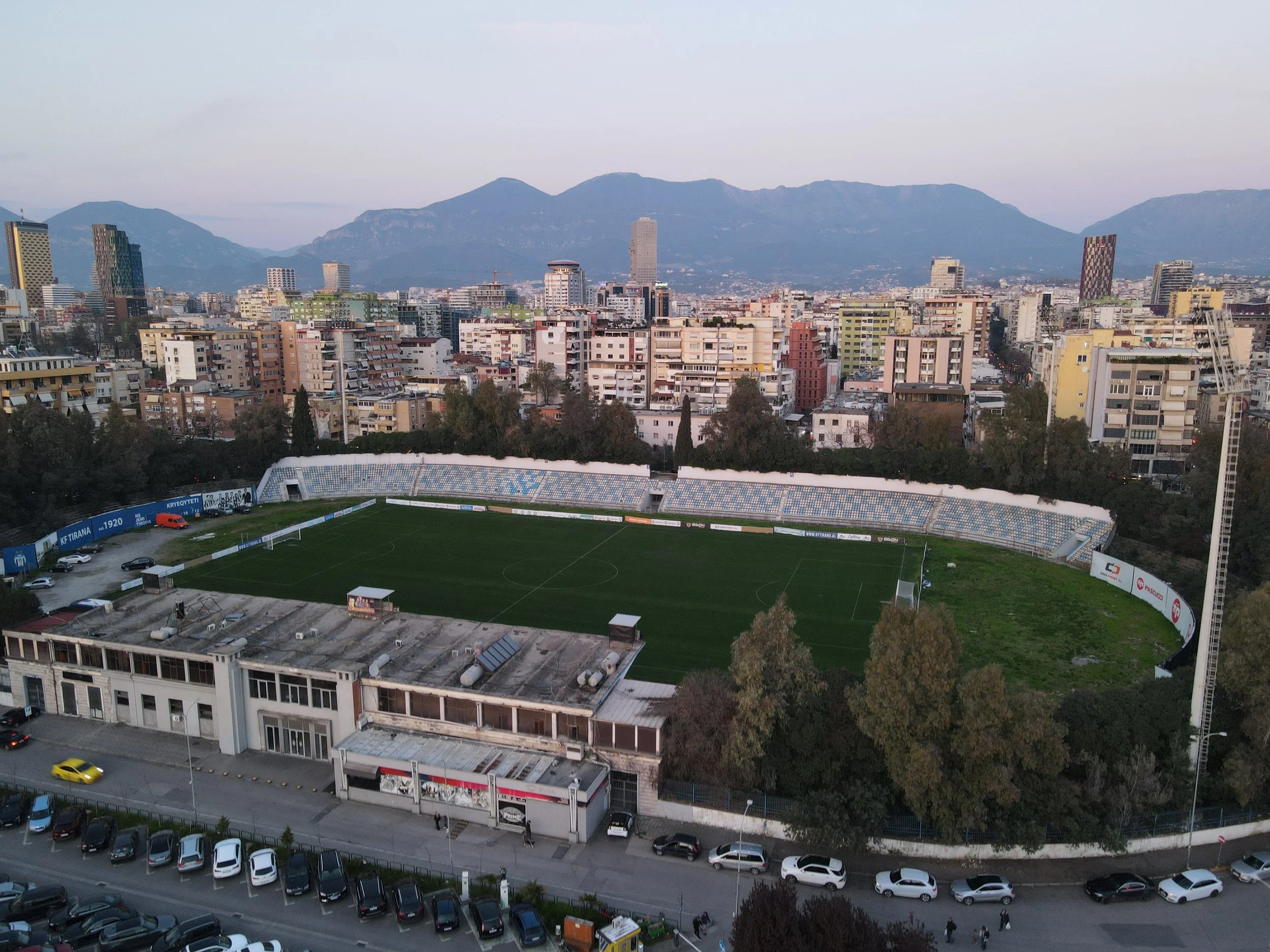
The rain was unrelenting, but it didn’t matter. You might not think it, but Albania is a country that bleeds football just as much as those nations synonymous with the sport. The capital, Tirana, was still bustling on the Thursday night of the Kuq e Zi’s (red and blacks) World Cup playoff semifinal away to Poland, despite a torrential downpour soaking the city.
Flags were unfurled and bars were packed; hopeful watchers had to convince strangers to join their reserved tables. A tangible sense of hope was in the air, too, with the national team having qualified for Euro 2024 (and beating Poland in the process). Spirits were lifted further when Arbër Hoxha pounced on a Polish error at the back to give Albania the lead right before the interval.
“If we keep the game like this, maybe we will win,” said Andi, a fan taking in the match at Hops, a bar in central Tirana, at half time. “We hope for the best of course and we are supportive of the team, of the players, they are very strong-hearted, they don’t quit. They don’t quit.”
A spurned chance to make it 2-0 early in the second half, followed by another missed opportunity soon after Robert Lewandowski’s equalizer, gave way to a wonderstrike from Piotr Zielinski and a Polish victory. Hope didn’t fizzle out until the very end, though, as that “never quit” resilience runs deep in Albania’s DNA.
A country that has withstood numerous occupations and the most isolated totalitarian dictatorship of the 20th century, Albanians are accustomed to overcoming suffering, as the football cliche goes, whether in sport or in life.
A decade of progress
Almost always the underdog, Albania’s first-ever qualification for a major tournament was Euro 2016.
“We are not favorites and we are used to not being favorites. We have never been, ever, I mean never, ever, ever. Truly,” Ermal Kuka, a veteran Albanian football journalist for local outlet Panorama Sport, insisted before the playoff match against Poland. “The first time in 2016, we had Denmark [in qualifiers], Portugal, we had Serbia, Armenia which was at a good level in those years, yet no one would have said Albania was a factor in that group. And we progressed.”
The growth and upswing in fortunes for the national team in the last decade has given the country’s visceral passion for football a bigger platform. There’s simply been more to celebrate. And if Albania held on against Poland, the celebrations would have overwhelmed the capital.
Kuka recalled the 2016 qualifiers, after the Kuq e Zi’s away match in Serbia when the team had already defeated Portugal and drew against Denmark, looking poised to progress. People from all over the country made a mad dash to the international airport, Rinas, just outside of Tirana to meet the team at 3:00 a.m.
“You could see there was a line of 50 kilometers of cars stopped, just honking…It was mayhem because there were even people coming from Kosovo to celebrate. Yeah. As soon as they understood that the match was over and they were returning, there were people getting in their cars and coming from Kosovo just to celebrate in Tirana.”
This collective pride and explosion of national joy that manifests itself through football isn’t a new phenomenon in Albania. It’s always been there.
Not many fans of the new generation, let alone people outside of the country, likely remember one of the most unforgettable triumphs in the national team’s history.
In September 2004, Albania defeated Greece 2-1 in Tirana in the Greeks’ first official match after being crowned European champions that summer.
“I don’t think anybody slept that night,” Kuka remembers. “You could see everywhere, broken chairs, stuff on the road, everywhere. The whole Blloku [central nightlife district in Tirana] was shattered to pieces…I remember that night there were like, I don’t know, 150,000 people on the roads, in the central square and main boulevard. Not cars, only people. I’m telling you, people.”
Further back, when the national team was at its lowest-ever FIFA ranking (124th) and the country was reeling from civil unrest, Albania produced a pair of memorable performances against Germany in World Cup qualifiers that fans of that generation won’t quickly forget.
It was 1997 and the national team was training abroad and playing its “home” matches in Granada due to the instability. Still, the whole country watched attentively despite a barren run of results during that period.
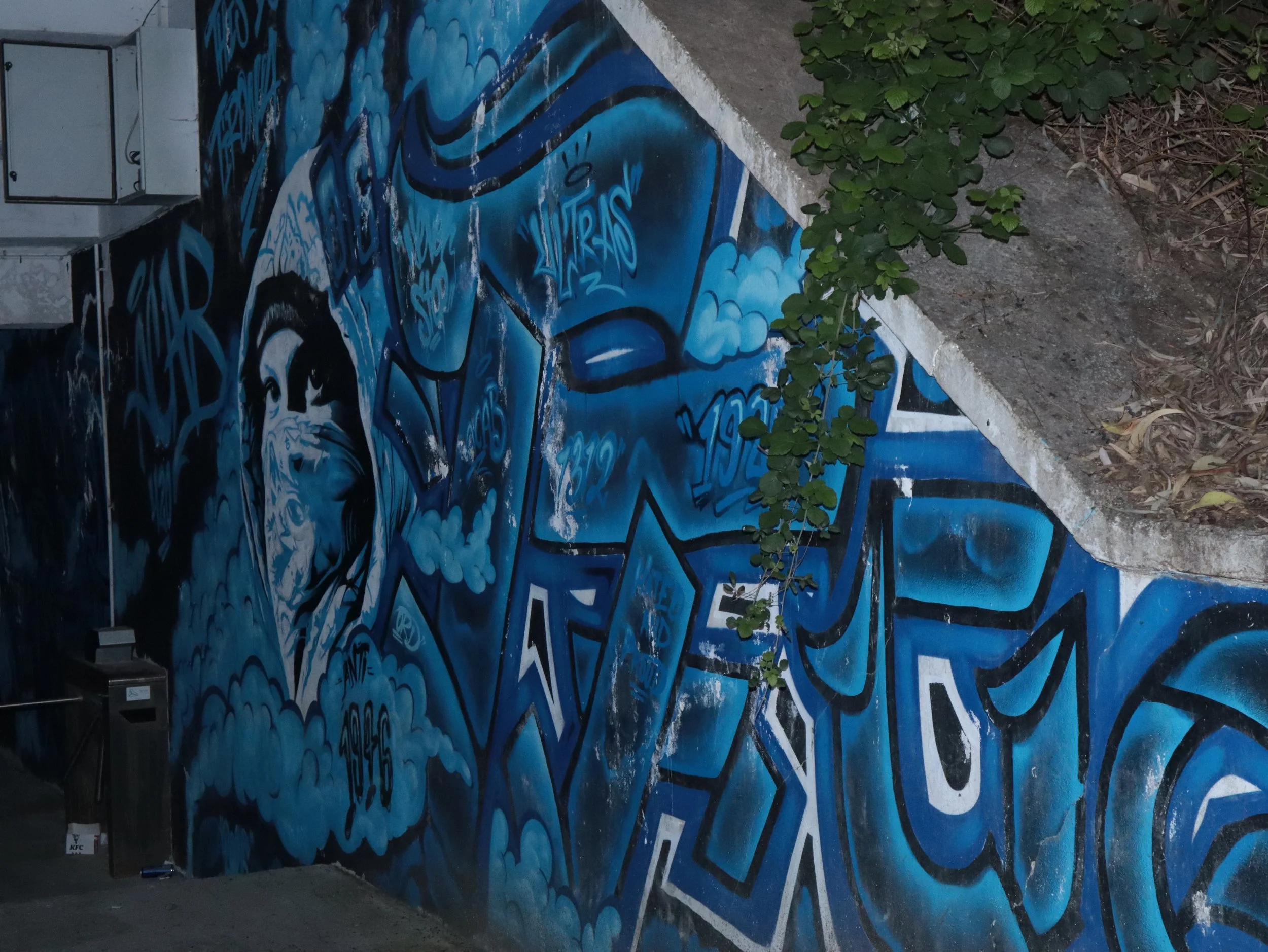
Graffiti outside KF Tirana’s Stermasi stadium.
The national broadcaster was showing the away match in Germany and perpetual underdogs Albania were level 3-3 with the hosts in the 91st minute. But, the signal suddenly went out and an entire nation was left in the lurch. Oliver Bierhoff went on to score in the 94th minute and everyone found out when the nightly news delivered the heartbreaking result.
“It was the goal that we saw three days later, there was no YouTube. These are the things that were happening…this sort of emotion,” Kuka said. “Even though the team wasn’t going to the European championship or World Cup. Even being rock bottom, we were having this sort of emotion built up for different matches. This is what we were like, and then results came, and of course it’s huge.
“It was the lowest FIFA ranking ever, but we had this kind of quality. It’s always been there. We had guys playing football in the best leagues.”
The growth and rise of Albanian football, especially on the national level, was inevitable. Ascending to a best-ever ranking of 22nd on the back of those Euro 2016 qualifiers, showing real ambition and potential to consistently be at major tournaments, and still having players throughout Europe’s top leagues are evidence of this.
But, for a country that’s football mad, the same can’t be said about its domestic league. Peeling back a layer of recent improvements in the international game reveals that most players responsible for it have come from Albania’s vast diaspora. They’re not raised in the youth academies of the Kategoria Superiore, the country’s top flight.
A global diaspora
Albanians abroad share in their homeland’s football fanaticism, to equally extreme levels with the national team as it, of course, is a way for them to remain connected to their roots.
“Many of these guys are part of the diaspora. These guys follow the team, we have fans everywhere. Pick a remote island, if we play tomorrow in the Samoa islands we’ll have Albanians there,” Kuka quipped. “We’re probably the only ones who filled the Faroe Islands national team stadium.
“I mean, we filled San Marino’s Serravalle for a friendly match. It was full of Albanians, there were 2,000 people in the stands watching a friendly match against San Marino, it blows your mind when you think about it.”
The foreign-born and foreign-trained Albanian players also bring with them a level of professionalism and understanding of the game that is lacking within the country’s infrastructure. The Kategoria Superiore’s downturn came in the early-to-mid 2000s, while the league’s peak came during the communist era when it was one of few forms of available, regime-sanctioned entertainment.
“Every match was full, you had people climbing walls, fences, trees, whatever they could find to watch that match,” Kuka said. “It didn’t matter which division you were, everybody was there.”
The hunger and curiosity for football in that era did extend beyond Albania’s borders, although watching foreign matches was strictly prohibited. That doesn’t mean people didn’t do whatever they could to do so, however, as Kuka fondly recalls these memories as his family found satellite signals from Montenegro.
“My first recollection as a child is watching, with the blinds down, we put blankets on the windows because you are not supposed to see foreign channels at the time…So my first recollection was putting blankets on the windows back in ‘88 watching the European championship.
“I remember going to school and everybody was speaking about Van Basten’s wonder goal… saying ‘did you see the guy score with his hair?’ Because Gullit scored and he had the long hair, but we had black and white TVs, we had TVs from the 60s and stuff so it really looked like the guy scored with his hair. And we said ‘shhh, you’re not supposed to talk about that.’”
This false dichotomy that has now formed between the country’s developing national team and dwindling domestic league has two root causes. Relocation in large numbers from Albania’s smaller cities to Tirana has caused a drop in population of these regional hubs, in turn negatively impacting generational support for local clubs.
The missing generational gap
The deeper, darker issue at play is match-fixing. This isn’t a huge secret, as KF Skënderbeu is in the midst of a 10-year ban from UEFA competitions due to “fixing football matches like nobody has ever done before in the history of the game” according to a UEFA investigation that Kuka helped report on for the Guardian when it broke in 2018.
In those years, according to Kuka, the Kategoria Superiore was a “hub for match fixing” and this has been a major factor in diminishing interest from a public that is infatuated with the sport. As recently as 2022, three clubs in Albania’s lower divisions received five-year bans, while a referee was barred for two years due to these issues.
“It was a bloodbath, like 2003, 2004, like every year from there there were teams fixing matches in the international competitions because that’s where the big money is. And when that started, the agents started putting [fixes on] the Albanian championship as well. Mayhem.
“It was so, so, so ugly to see and everyone was running away from football. This creates a gap, a generational gap that’s missing. It influences the next generations as well.”
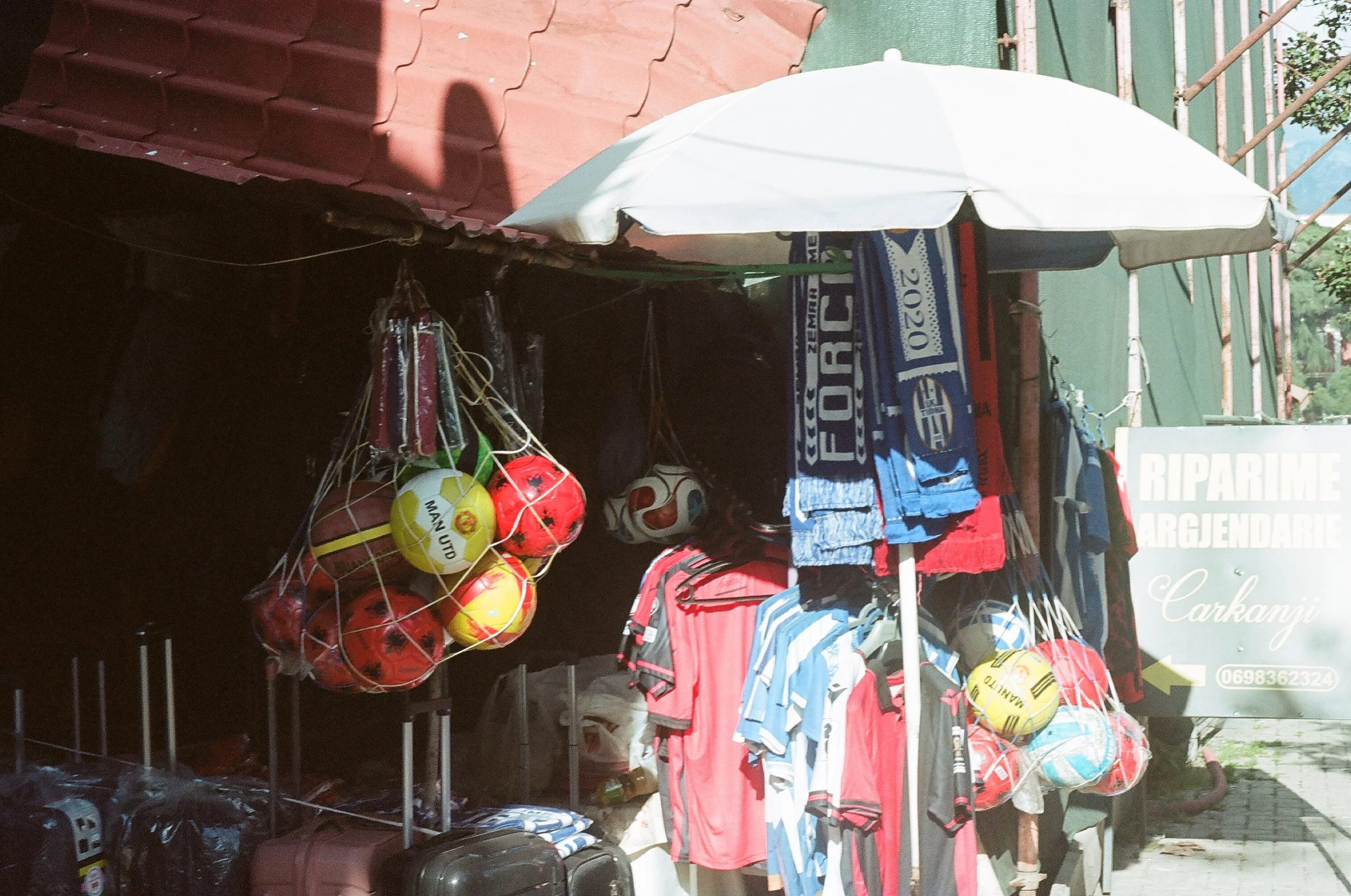
European giants like Manchester United and teams from Serie A are the preference for many younger Albanians.
The generational gap is evident even in Kuka’s family. He explained how his 15-year old son has no interest in his local club despite living 100 meters down the street from the stadium.
Meanwhile, Kuka’s phone rang while being interviewed for this story. It was his father, calling to ask the score of the Elbasan-Egnatia match the night before and what time his hometown club, Vllaznia, was playing later that day. Those three sides are locked in a title race and his father was pleased that Elbasan-Egnatia ended in a draw. At 90 years old, his father still listens to all of Vllaznia’s matches on the radio and retains a deep connection to the club.
That’s not to say the younger generations have no inclination towards club football. Everyone has a foreign club that they fiercely support, with Serie A being the most popular league. And on Champions League nights midweek, every bar in Tirana is full of fans mesmerized by the showpiece fixtures.
Finding hope in rivalry
Despite the general malaise towards the domestic league, the derby in the capital between KF Tirana and Partizani is an outlier as it unearths a heated atmosphere between the clubs’ small but tight-knit ultra groups.
“I’m a great supporter of Partizani…it’s a good atmosphere, especially on derby matches, but still there aren’t a lot of people,” said Adriano, another fan at Hops watching Albania-Poland. “We are few but it’s a good atmosphere especially on the derby of Tirana and Partizani. They are our biggest rivals, we always beat them.”
This rivalry is a microcosm of the untapped potential for a thriving domestic league in the country. Mired by the corrupt recent history and a football federation seemingly complicit in these issues, a lot needs to change for local football to return to its peak.
“In the Balkans, people are visceral, raw,” Kuka explained. “And I still believe that, with the proper tools, the Albanian championship and the Albanian clubs could go really, really higher. Because if you have this kind of passion towards football, you can still get something out of it. But, it does not depend on the fans. It depends on the policymakers.”
Football in Albania is adored yet complicated, thriving in many ways yet begging for reform in many others. Passion is what makes this sport the world’s game and there is no shortage of it in this small-but-mighty Balkan nation.
After the loss to Poland in the World Cup playoff, umbrellas were opened en masse as the overcrowded bars emptied in a muted procession. Instead of honking and chanting, Tirana was serenaded only by the pouring rain.
But keep an eye on the Kuq e Zi. The sun will soon shine again on Albanian football. And no one should be shocked when it does.