
One final raised arm: A eulogy for Franco Baresi
For the Italian translation of this article, please scroll down.
The Beach Boys song “God Only Knows” doesn’t sing about love the way everyone else does; it doesn’t promise eternity, it questions it.
It asks: what would I be without you? It’s a question you can only ask once someone has stood beside you so long they’ve become invisible, like the air, like the foundations of a house nobody looks at but that hold up everything else.
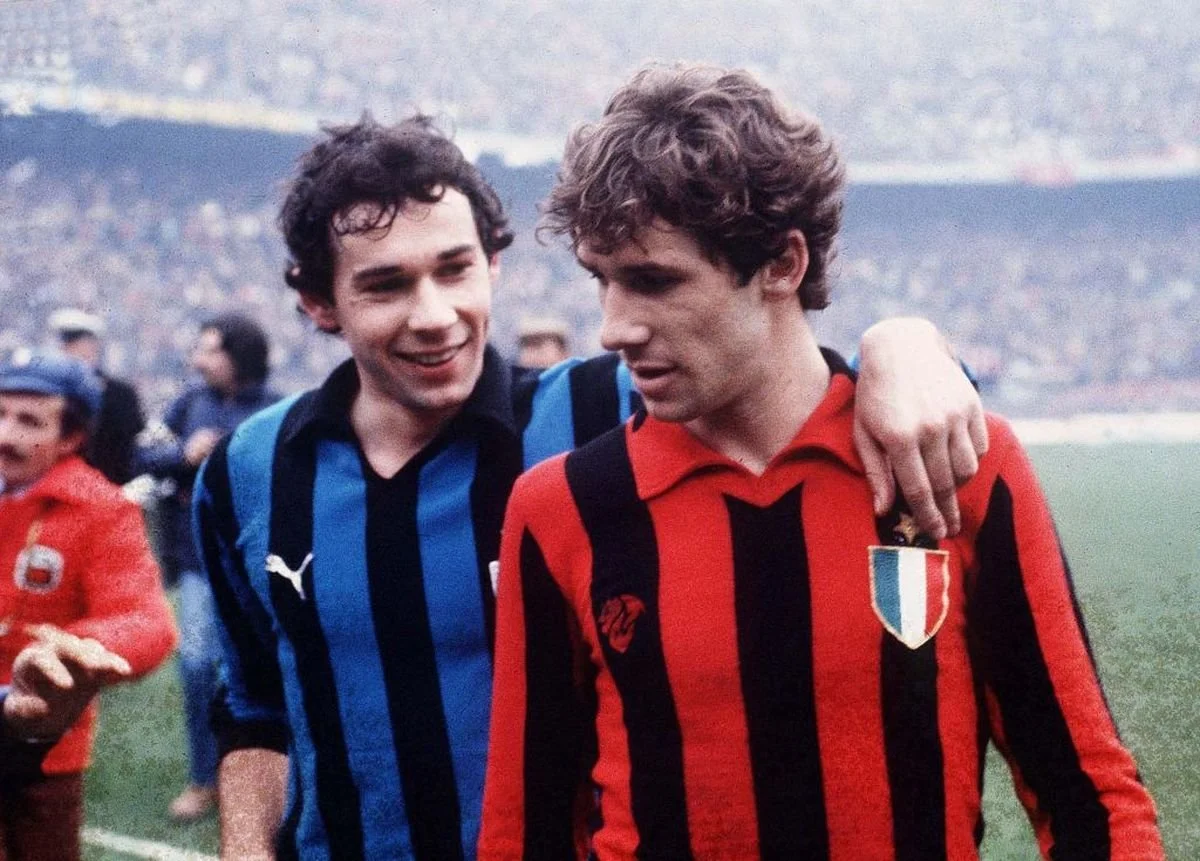
For A.C. Milan and for Italy, this was Franco Baresi. A presence so constant and necessary that only now, having lost him to an incurable illness—in this stifling summer without any glory for Italian football, do we notice it.
But hot summers without glory were never new to the Piscinin (the little one).
The first was undoubtedly the Serie B season of 1980, when Milan were relegated, swept up in the calcioscommesse betting scandal. At that moment, clubs empty out. Ambitious players look for the nearest exit toward brighter stages. But Baresi, barely more than a boy, stayed at Milanello. He stayed because that shirt, that club, had given him everything when he had nothing left (orphaned of both parents at a very young age, he had found in Milan a family that had welcomed him with open arms).
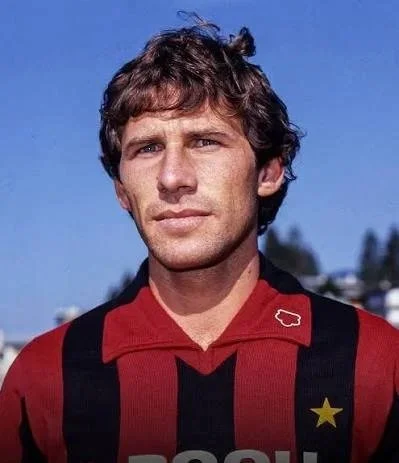
Staying, during that dark moment, wasn’t a tactical choice—it was an act of gratitude.
He played in Serie B as a starter, in minor stadiums and dusty away trips, writing through his silent loyalty, line after line, the instructions for the perfect captain, even before an armband was stitched around his arm. And despite two Serie B campaigns—following relegation in 1980 and 1982—his class didn’t go unnoticed. He was called up for the World Cup in Spain, still very young, as Italy crowned itself world champion.
But taking center stage in that defense was Gaetano Scirea, another great “silent one” of Italian football, a man who glided across the grass with the elegance of someone who never needed to run and sweat to prove he was decisive.
Being overshadowed by Scirea wasn’t a defeat, it was standing beside a mirror that showed him who he could become.
Baresi watched, learned, waited his turn without noise. This too is a form of presence: the presence of someone who is there even without playing, who builds his stature in the shadows to show it, later, in the light.
And that’s what he did twelve years later, under the sun of that scorching Pasadena summer.
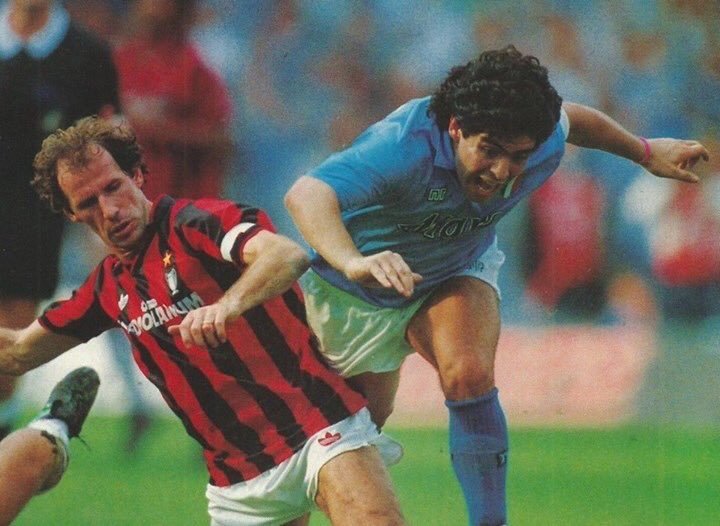
Baresi tore his knee in the World Cup group stage, had surgery, and broke the logic of modern football that would already have consigned him to the stands, a spectator for the most important final of his life. He returned to the pitch after just twenty-six days of rehabilitation, against Romário, the best striker on the planet, the tournament’s top scorer, and the beating heart of a ruthless, clinical Brazil.
And there, at the Rose Bowl in Pasadena, a man rebuilt in a matter of weeks held off the man who seemed unstoppable, closing every space, anticipating every thought, as if the body could be put back together faster than the iron will of a man who had promised his team he’d be there.
The result of that night, decided on penalties, doesn’t erase what Baresi had already proven before the first whistle: that certain kinds of presence aren’t measured in trophies, but in the ability to come back and take your teammates and your country by the hand.
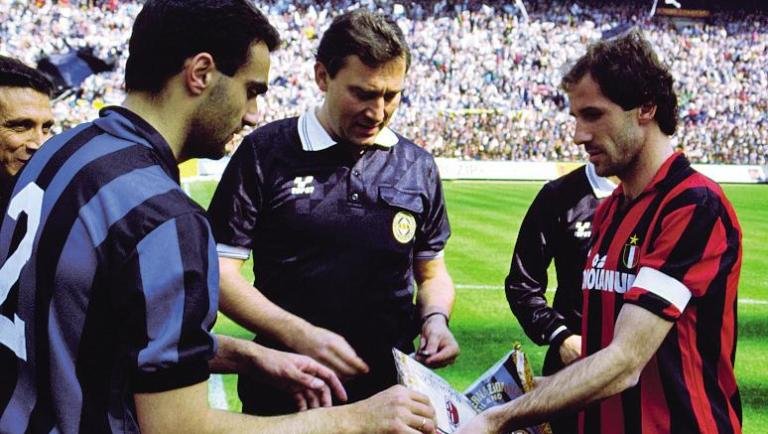
Franco Baresi now belongs to a football that today has the bittersweet taste of a family memory, the kind where kids in courtyards raised their arm to signal offside, imitating defenders the way you imitate heroes. A football where defending didn’t just mean covering space on the pitch, but honoring the colors you wore, with the ethics of an old-fashioned knight, measured in timing, elegant in his sliding tackles, able to read the game like a chess match.
The defenders of that generation didn’t chase the game: they anticipated it, they governed it, they gave it an almost geometric order through what we’d nowadays, inaccurately, call “aura.”
That school produced worthy heirs: Alessandro Costacurta, a companion in a thousand silent battles in the same back line, or further down the line but along the same path, Fabio Cannavaro and Alessandro Nesta—themselves walls who carried that lesson all the way to another World Cup win, in 2006.
We name Paolo Maldini last, because he was the finest of Franco’s students. He didn’t just turn defensive elegance into a trademark, he also proved himself one of the most capable executives in contemporary football, always putting his own values and the good of the community ahead of any personal calculation, even now, having stepped down from his role with the national team rather than betray them.
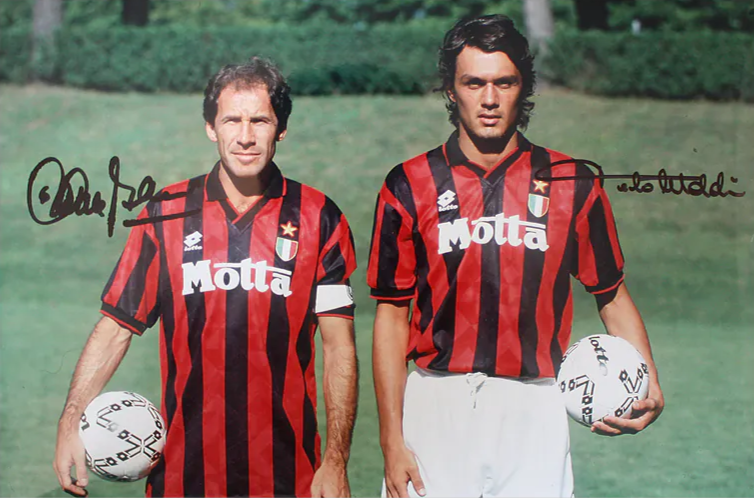
“God only knows what I’d be without you,” sang the Beach Boys. Milan and Italy, fortunately, never truly had to answer that question—until today.
Because Franco Baresi was always there. And that’s exactly why today, for the first time, on the day of his funeral, that question is no longer rhetorical. It’s frightening to imagine a football orphaned of his poise, of his industrious silence, of his way of being both a guide and example. For an entire lifetime, Baresi spared us that question, always staying right there, in his place at the heart of the defence, like foundations you never notice until they give way.
Now that he has bid us farewell, it’s up to us to discover what we’ll be, without him and without that raised arm. The same gesture that kids in courtyards used to imitate him, a silent call to the referee and to the opponent who’d slipped behind the back line, a warning to the teammate lost in one distraction too many—never a shout, never a curse, just an arm raised, and that was enough to restore order.
When Baresi raised his arm, his reading of the game was law. Our arms, today, don’t have that power, they’re simply the powerless gesture of us mere mortals, raised together to say goodbye, and perhaps, unconsciously, to try to call this farewell back, to stop the one play no referee can ever truly reverse—hoping that this time, it’s us who catch our captain offside.
***
C’è una canzone dei Beach Boys, “God Only Knows”, che non parla d’amore come lo cantano tutti gli altri perché non promette eternità, ma la interroga.
Chiede: cosa sarei io, senza di te? È una domanda che si può fare solo quando qualcuno è rimasto così a lungo al proprio fianco da diventare invisibile, come l’aria, come le fondamenta di una casa che nessuno guarda ma che reggono tutto il resto.
Franco Baresi è stato questo, per il Milan e per l’Italia: una presenza così costante, così necessaria, da poterla notare davvero solo ora che un male incurabile l’ha portato via in questa calda estate senza gloria per il calcio italiano.
Ma di calde estati senza gloria non ce ne sono mai state invece per il “Piscinin”.
La prima è senza dubbio quella della Serie B del 1980, dove il Milan venne retrocesso, travolto dallo scandalo del calcioscommesse. È il momento in cui i club si svuotano, in cui i giocatori ambiziosi cercano la porta d’uscita più vicina per scappare verso palcoscenici migliori: Baresi però, poco più che ragazzo, resta a Milanello. Resta perché quella maglia, quella società, gli avevano dato tutto quando lui non aveva più nulla: orfano di entrambi i genitori in giovanissima età, aveva trovato nel Milan una famiglia che lo aveva accolto a braccia aperte. Restare, in quel momento buio, non è una scelta tattica ma un atto di riconoscenza.
Gioca la Serie B da titolare, in stadi minori e trasferte polverose, scrivendo attraverso la sua fedeltà silenziosa, riga dopo riga, le istruzioni del perfetto capitano, prima ancora che una fascia gli fosse cucita attorno al braccio in segno di gratitudine. E nonostante due campionati di Serie B, quelli delle retrocessioni del 1980 e del 1982, la sua classe non passa inosservata: viene comunque convocato per il Mondiale di Spagna, giovanissimo, mentre l’Italia si laurea campione del mondo.
A giocare da protagonista in quella difesa c’è però Gaetano Scirea, altro grande “silenzioso” del calcio italiano, un uomo che scivolava sull’erba con l’eleganza di chi non ha bisogno di correre e sudare per dimostrarsi determinante.
Essere oscurati da Scirea non è una sconfitta: è stare accanto a uno specchio che ti restituisce l’immagine di chi potrai diventare.
Baresi guarda, impara, aspetta il proprio turno senza rumore. Anche questa è una forma di presenza: quella di chi c’è pur non giocando, di chi costruisce nell’ombra la propria statura da mostrare più avanti alla luce del sole.
Il sole della cocente estate di Pasadena del 1994 per esempio, dodici anni dopo.
Baresi si lesiona il ginocchio nella fase a gironi della Coppa del Mondo, si opera e spezza la logica del calcio moderno che lo avrebbe già consegnato alla tribuna, spettatore della finale più importante della sua vita.
Si ripresenta infatti in campo con appena ventisei giorni di riabilitazione alle spalle, contro Romario, il miglior attaccante del pianeta in quel momento, capocannoniere e cuore pulsante di un Brasile spietato e cinico.
E lì, al Rose Bowl di Pasadena, un uomo ricostruito da poche settimane tiene testa a colui che sembrava inarrestabile, chiudendo ogni spazio, anticipando ogni pensiero, come se il corpo potesse essere rimesso insieme più in fretta dalla volontà ferrea di chi aveva promesso alla sua squadra di esserci.
Il risultato di quella notte, deciso ai rigori, non cancella quello che Baresi aveva già dimostrato prima ancora del fischio d’inizio: certe presenze non si misurano nei trofei, ma nella capacità di tornare a prendere per mano i tuoi compagni ed il tuo Paese, quando tutti si aspettano un più che degno forfait.
Franco Baresi ormai appartiene a un calcio che oggi ha il sapore malinconico del ricordo di famiglia: quello in cui i bambini nei cortili alzavano il braccio per segnalare il fuorigioco, imitando i difensori come si imitano gli eroi. Un calcio in cui difendere non voleva dire solo coprire uno spazio in campo, ma onorare i colori che si indossavano: con l’etica di un cavaliere antico, misurato nei tempi, elegante nelle scivolate, capace di leggere il gioco come in una partita a scacchi.
I difensori di quella generazione non rincorrevano il gioco: lo anticipavano, lo governavano, gli davano ordine quasi geometrico tramite quella che oggi chiameremmo impropriamente “aura”.
Da quella scuola sono poi nati degni eredi: Alessandro Costacurta, compagno di mille battaglie silenziose nello stesso reparto o più lontano nel tempo ma nello stesso solco, Fabio Cannavaro e Alessandro Nesta, muri che hanno portato quella lezione fin dentro ad un altro Mondiale vinto, nel 2006.
Paolo Maldini lo citiamo per ultimo, perché è stato il migliore tra gli allievi di Franco. Non si è limitato a rendere l’eleganza difensiva un marchio di fabbrica, ma ha saputo imporsi anche come uno dei dirigenti più capaci del calcio contemporaneo, mettendo sempre i propri valori e il bene della comunità prima di ogni calcolo personale, anche ora che ha lasciato il suo incarico in Nazionale pur di non tradirli.
“God only knows what I’d be without you”, cantavano i Beach Boys. Il Milan e l’Italia, per fortuna, non hanno mai dovuto rispondere davvero a questa domanda, almeno fino ad oggi.
Perché Franco Baresi c’è sempre stato, ed è proprio per questo che oggi, per la prima volta, nel giorno del suo funerale, quella domanda non è più retorica: fa paura.
Fa paura pensare a un calcio orfano della sua misura, del suo silenzio operoso, del suo modo di essere guida ed esempio.
Per una vita intera Baresi ci ha risparmiato quella domanda, restando sempre lì, al suo posto in mezzo alla difesa, come le fondamenta di cui non ti accorgi finché reggono.
Ora che ci ha salutati, tocca a noi scoprire cosa saremo, senza di lui e senza quel braccio alzato. Lo stesso gesto che i bambini nei cortili utilizzavano per imitarlo, un richiamo silenzioso all’arbitro e all’avversario scappato dietro alla linea difensiva, un monito per il compagno che si perdeva in una distrazione di troppo: mai un urlo, mai un’imprecazione, solo un braccio che si alzava e bastava a rimettere ordine.
Quando Baresi alzava il braccio, la sua lettura del gioco era legge. Le nostre braccia invece oggi, non hanno quella forza ma sono semplicemente il gesto impotente di noi semplici mortali, alzate all’unisono per salutarlo e forse per provare inconsciamente, ad annullare questo addio, a fermare l’unica azione che nessun arbitro può davvero fischiare indietro, sperando di essere noi questa a pescare il nostro Capitano in fuorigioco.