
The fight against police surveillance on German football terraces
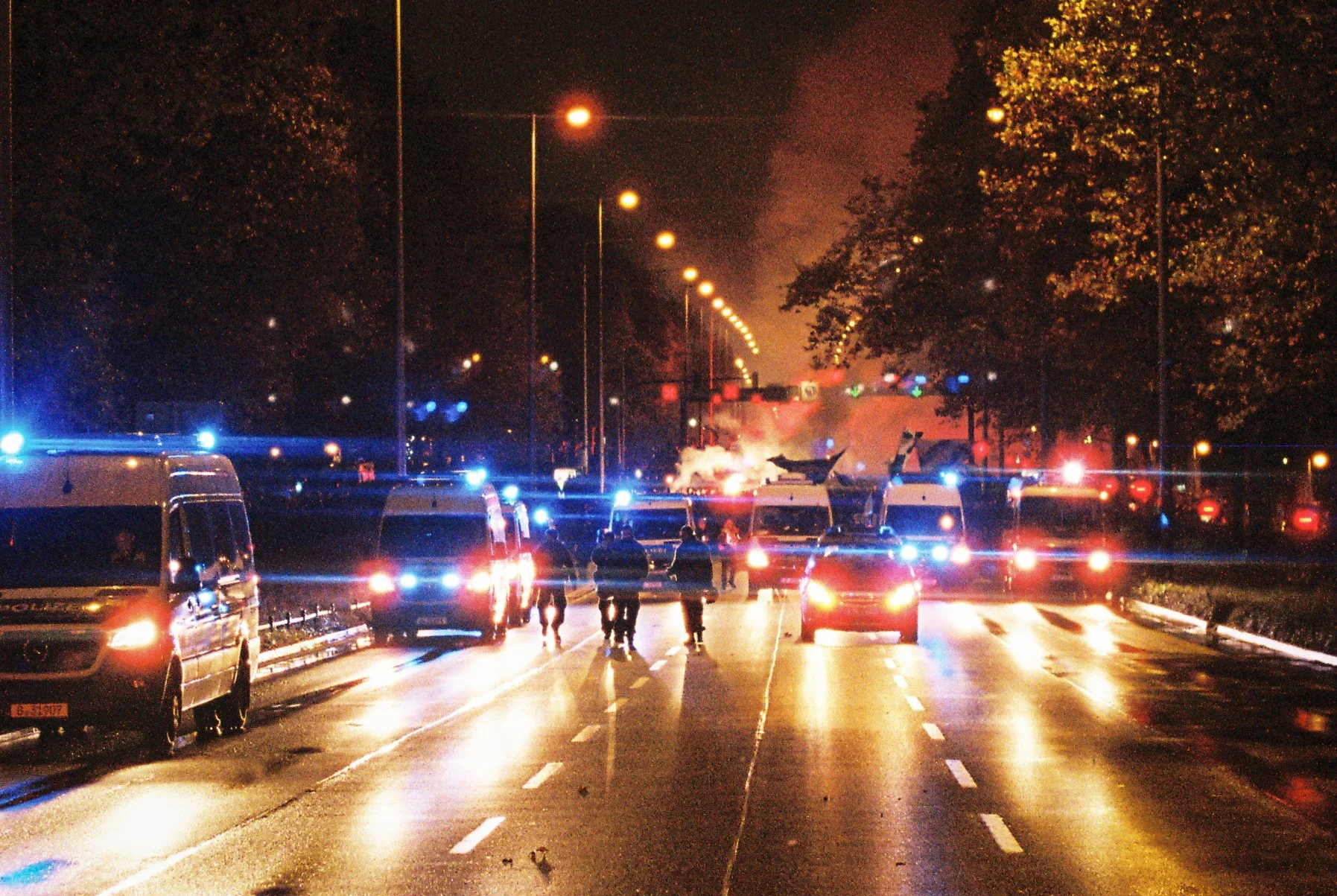
Image courtesy of @jenslewi.
“Der Fussball ist sicher! Der Fussball gehort uns!” Football is safe! Football is ours!
The chant roared out across the streets of Leipzig. The protestors made up a sea of red, blue, black and yellow scarves. Colours that were once divided had now merged to form a rare, unified front.
I can't help but be reminded of Walter Hill's 1979 cult classic film The Warriors. In the film's opening scene, Cyrus gathers all the street gangs of New York together in a tense mass-rally. He explains to them that their combined numbers are more than that of the police, and if they work together, they could overpower the authorities and control New York for themselves.
For now, ultras from clubs like Hansa Rostock and Dynamo Dresden, or Lok Leipzig and Chemie Leipzig, maintain the truce. A tense but peaceful demonstration goes ahead. As far as they are concerned, there is a common enemy today.
Megaphones are cracking and banners are being unfurled as the 20,000 demonstrators brave the cold German winter to unite under the mutual belief that football can not be turned into a testing ground for new surveillance powers.
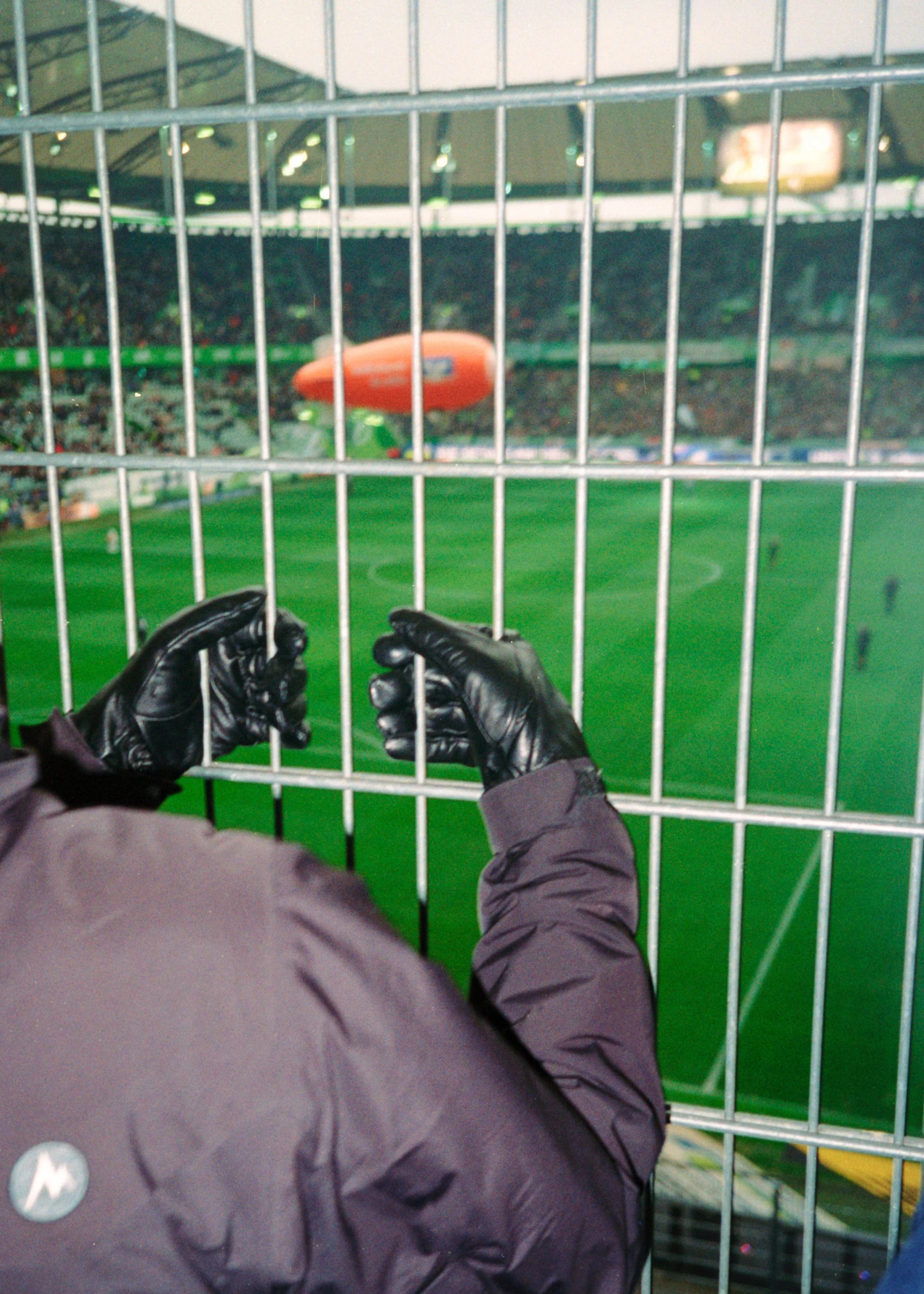
Image courtesy of @jenslewi.
The Leipzig demonstration back in mid-November was the latest expression of a movement in Germany that has spread from Dortmund to Karlsruhe and from Hamburg to Munich. It has united ultras groups, casual fans and families into an organised supporters revolt against proposed security measures that many believe will threaten the very identity of German football. Regional, historical and ideological rivalry is a cornerstone of German football culture. But the level of alignment can only indicate that something much larger, like the defence of a cultural institution, is at stake.
To understand why that moment felt so significant, you have to understand how uniquely fan-centric German football is.
Unlike in much of Europe, supporters here enjoy a degree of democratic influence. Tickets remain relatively affordable; standing terraces such as Dortmund’s Südtribüne and Union Berlin’s Waldseite are living entities and often operate as autonomous zones with their own laws and culture that is indifferent to the state and the police. Germany’s famous 50+1 rule prevents clubs’ voting rights being fully controlled by private investors.
Matchdays are communal rituals where the focus for many is often on the community around football rather than trophies or promotions. The stadiums are packed every week because fans see themselves as custodians and not as customers.
This sense of stewardship is at its strongest amongst the ultras, who form the backbone of the matchday atmosphere. The ultras operate with strict internal rules, perform lots of community work and coordinate massive choreographed displays that take hundreds of hours to prepare. They negotiate with clubs, police and local authorities and hold them to account on many occasions. They see anonymity as essential to maintaining a culture built on collective identity rather than individual profiling.
Ultras are often the first to mobilise when they believe fan rights are threatened. With the current issue they did not hesitate.
The first warning signs of these new measures began in Autumn, when the Interior Ministry suggested that it was going to meet to consider significant changes to stadium security policy.
Some of the ideas floated included personalised tickets that would require every fan to be identifiable at all times, AI-assisted surveillance systems including facial recognition technology, streamlined data exchanges between clubs and police, as well as a more powerful stadium-ban commission. There was even talk that pyrotechnics would become a zero-tolerance issue.
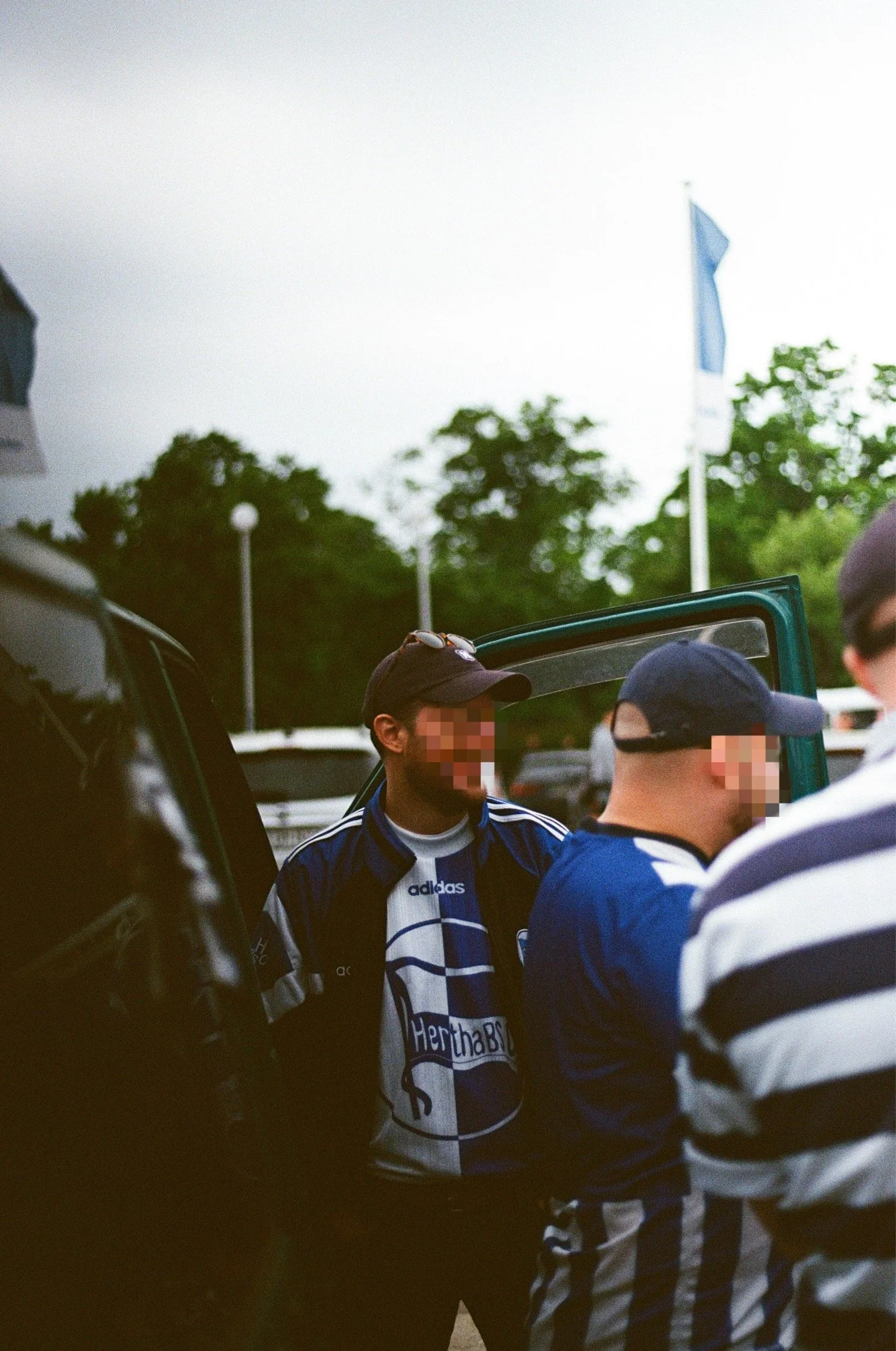
Image courtesy of @jenslewi.
These measures have been justified under the pretense of public safety. Yet to many fans, the proposed regulations felt less like reasoned policy and more like a political performance. It has been viewed as a way to appear tough on security by targeting one of the most visible public environments in the country.
Thomas Kessen, the spokesperson for prominent fan organisation Unsere Kurve, described the measures as part of “regulatory mania on the part of the Interior Ministry.”
The anger from supporters intensified when federal police released annual statistics showing, once again, that stadium visits remain overwhelmingly safe. Serious incidents are exceptionally rare, especially relative to the millions who pass through turnstiles each season. Supporters’ groups seized on this data as proof that the narrative of escalating football violence was mythmaking.
In mid-January, prejudicial tensions on the part of the police and authorities bore fruit when 52 people were injured during Hertha’s home match against Schalke.
The entrance to the Olympiastadion’s Ostkurve – the home of Hertha’s ultras and most dedicated fans – spiralled into “massive police violence” according to Hertha BSC-Fanhilfe, one of many supporters’ rights groups. Their account recalls how officers aggressively provoked and confronted fans waiting to enter the stands, before deploying pepper spray indiscriminately, without any attempt to de-escalate tensions.
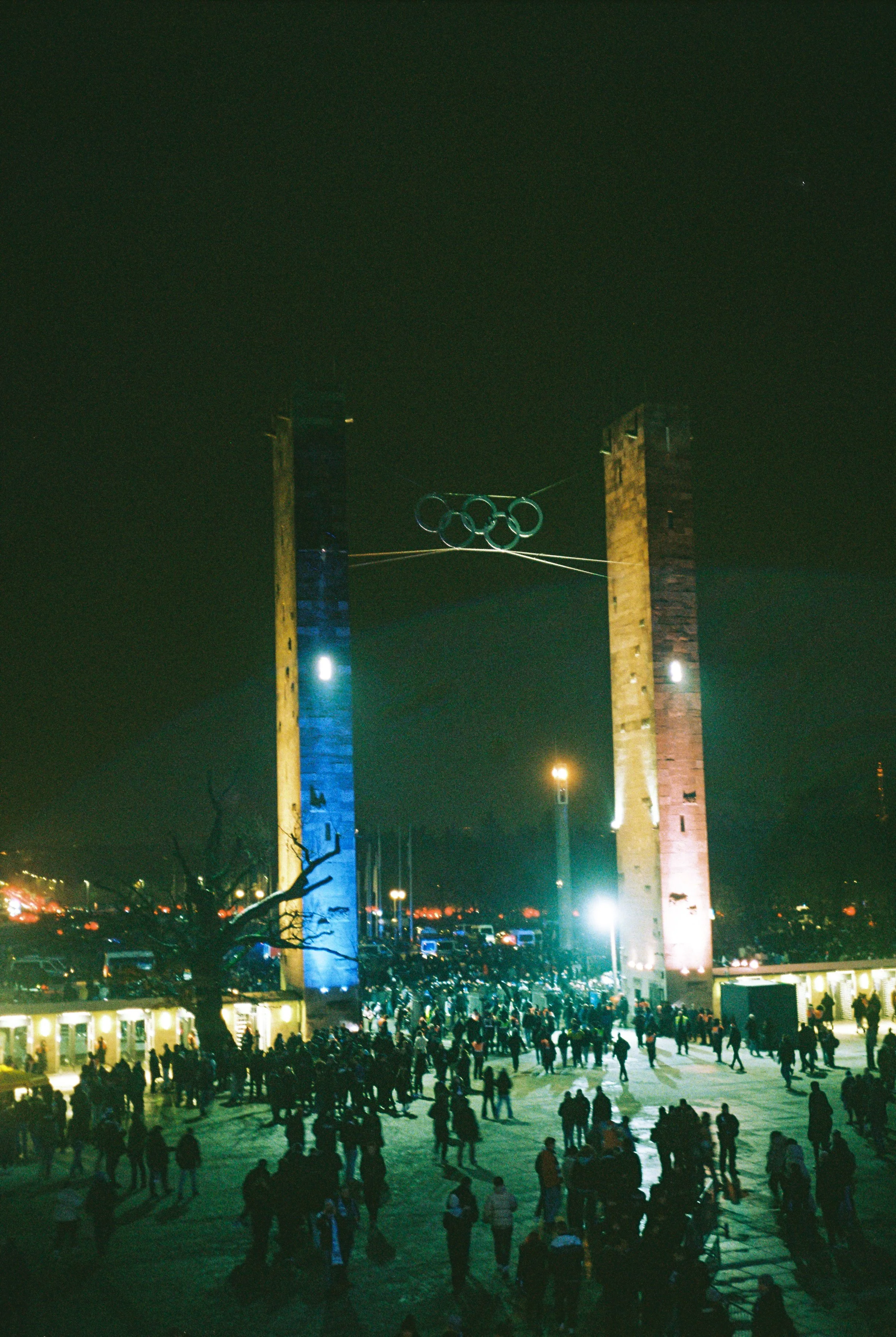
Image courtesy of @jenslewi.
Hertha’s Ostkurve decided to leave the game around 20 minutes after kick off, in protest. Fan representatives publicly wrote to the city of Berlin, demanding personal accountability and the removal of the police leadership responsible for the operation. Berlin’s Policing body, in response, argued the use of force was necessary to protect officers and other spectators. The incident has since triggered wider political upheaval: Hertha’s management openly criticised the policy strategy and urged for renewed dialogue.
But what it most represents is a widening distrust between football supporters and the authorities.
What makes this wave of mobilisation remarkable is the sheer breadth of participants.
Across Bundesliga and 2. Bundesliga matches, fans staged 12 minutes of silence from kickoff, to illustrate how soulless football would feel under increased surveillance. Supporters’ networks have drafted joint statements and published petitions that have drawn tens of thousands of signatures. Videos of marches circulated online with professionally edited clips, narrated montages, drone footage of masses moving like rivers through city streets.
As we saw with protests against the DFL’s proposal to sell a stake in its media rights to outside investors in early 2024, fans are ready to escalate their activism in a coordinated, choreographed fashion.
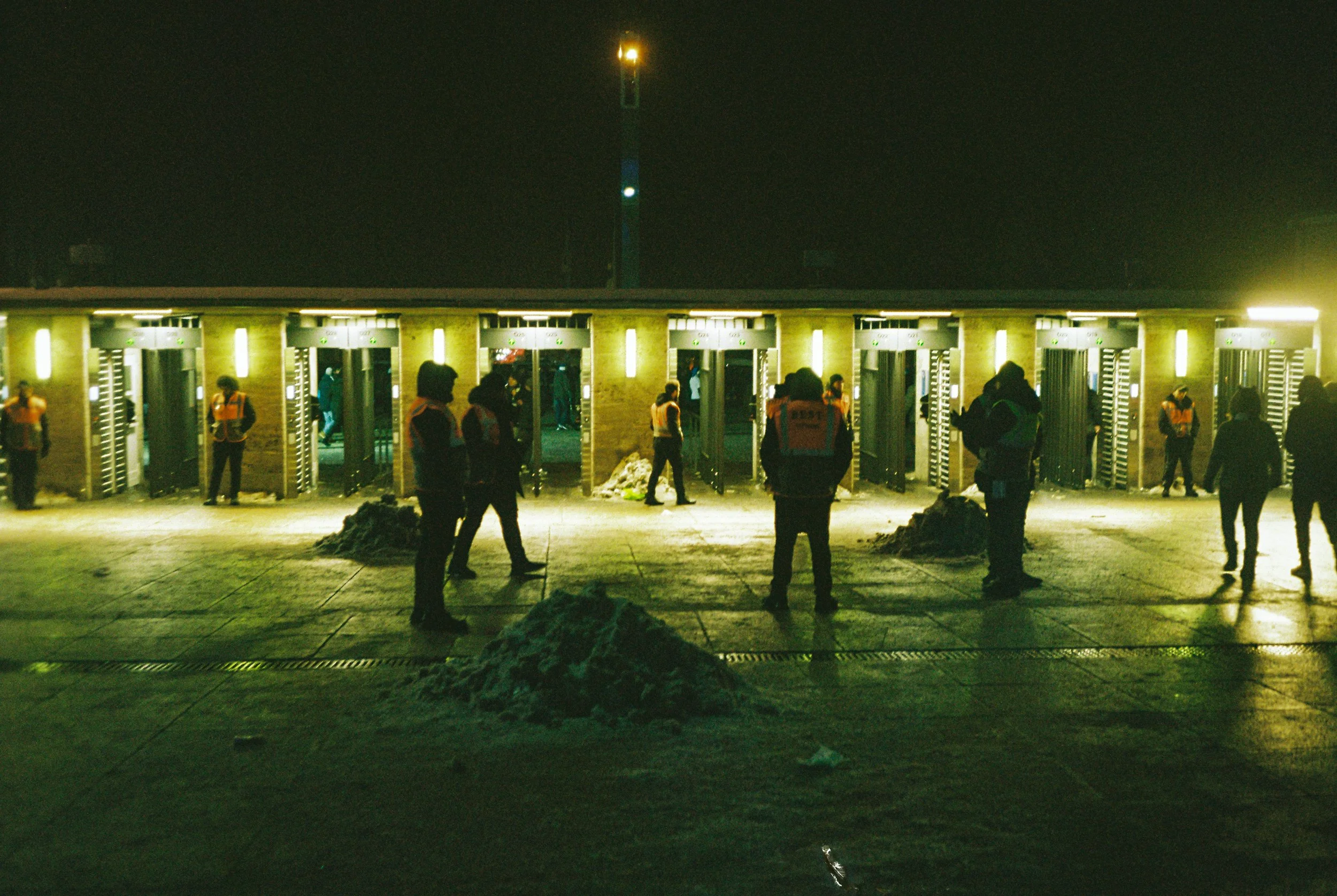
Image courtesy of @jenslewi.
“Stop using us as a backdrop for populism,” read one banner in Karlsruhe, as 4,000 KSC supporters marched before a home match against SV Elversberg. Another simply said: “Wir sind keine Versuchskaninchen” - “We are not test subjects”. The march wound through the city streets, cutting between shopping plazas and tram lines as locals leaned out of windows to watch.
The resistance against these new measures is not simply about tickets or technology. There is a cultural and even an existential argument at play. Stadiums, for German fans, are one of the last places where large groups of people can gather without being constantly identified, monitored, or tracked. Many supporters argue that if stadiums become heavily controlled, other public spaces will follow. Football, as the most visible form of mass gathering in modern Germany, sets precedents that ripple beyond sport.
Clubs and governing bodies have taken notice. While few are eager to confront politicians directly, the DFL and DFB have cautiously echoed fans’ concerns, emphasising that collective punishment and intrusive technologies risk alienating the very communities that give German football its global reputation for vibrancy. Some club executives have publicly questioned the need for personalised ticketing, noting the logistical burden and the likely impact on spontaneous attendance which is a key part of matchday culture. Many other countries such as Greece and Italy have similar systems which has caused their match day attendances to drop dramatically. Others worry that overly aggressive policing could reignite tensions that took years to defuse through dialogue-based approaches.
The protests continue to evolve. In Hamburg, supporters have organised discussions in community centres to educate newer fans about their rights. In Stuttgart, ultras have created a travelling exhibition documenting decades of fan activism, drawing parallels between previous struggles such as the fight against the criminalisation of pyrotechnics, against Monday-night fixtures and against poor policing. Online, fan networks have been sharing legal advice on data protection and producing infographics explaining the implications of AI surveillance. The movement is becoming both cultural and educational.
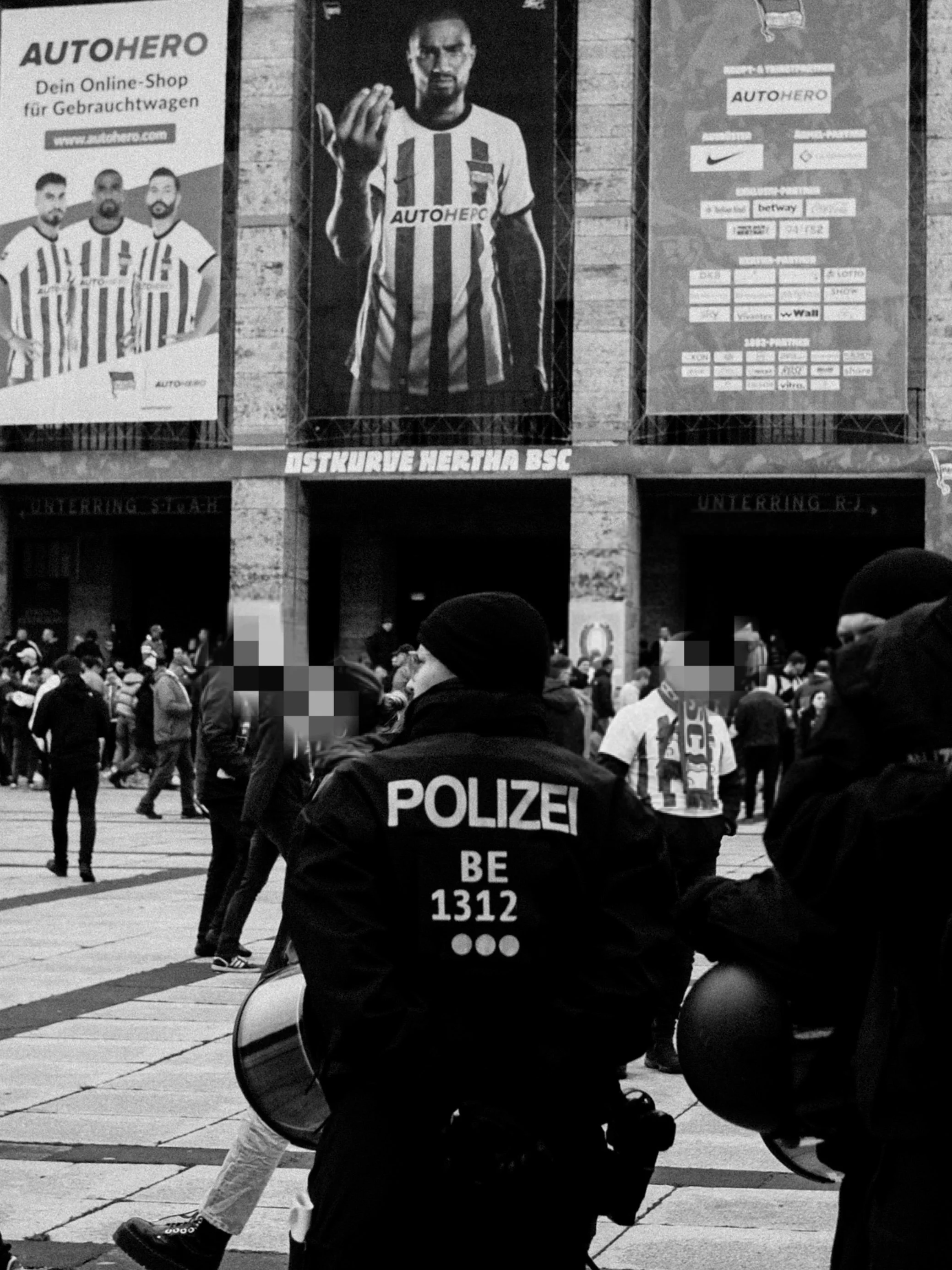
Image courtesy of @jenslewi.
The Interior Ministry is continuing to meet to discuss these proposed new measures. Even if some of them are softened, the relationship between fans and policymakers has been fundamentally altered going forward. Supporters no longer see themselves as reacting to threats but as participants in a national conversation about civil liberties. Many speak of this moment as a turning point.
What becomes of this movement will depend on the months ahead. The 12-minute protests have ended, and there appears to have been at least a temporary climbdown from the Interior Ministry on the urgency of the measures. But the wider discussion around protected spaces, policing and surveillance isn’t going away.
On the evening after the Leipzig march as supporters dispersed into the city’s bars and train stations, someone taped a sheet of paper to a lamp post near the opera house. Scrawled in thick marker were the words: “Ohne uns bleibt es still.” “Without us, it stays silent.”
It was both a warning and a promise. Fans remain ready to show not just what they oppose but also what they are fighting to protect - a living culture built on noise, colour, contradiction, solidarity and above all, freedom.
Ethan Rooney is a freelance journalist based in Dublin. Read more of his work here.